
Perched on the slopes of Mount Caputo, Monreale overlooks Palermo with a panorama that encompasses the entire Conca d’Oro. It is a place where time seems suspended, an artistic and spiritual jewel that houses one of the most extraordinary masterpieces of the Middle Ages: the Cathedral of Monreale, considered one of the most beautiful churches in the world.
Monreale was born at a crucial moment in Sicilian history, when the island was a mosaic of cultures—Arab, Byzantine, Latin—and the Normans were building one of the most refined courts in Europe.
The history of Monreale is inextricably linked to William II of Hauteville, known as “the Good“.
We are in the second half of the 12th century: the young king wants to consolidate the power of the Norman monarchy, but also to leave an indelible spiritual and political mark.
According to legend, the Virgin Mary appeared to him in a dream, showing him the place where he should build: a great abbey, a majestic cathedral, and a Benedictine monastic complex dedicated to contemplation and culture.
That place was Monreale, an extraordinary panoramic point above Palermo, in the heart of the Conca d’Oro.
Beginning in 1174, Arab craftsmen, Byzantine mosaicists, and Norman architects worked side by side to create something unique: a complex that combined the artistic excellence of three worlds. The result was a miracle of harmony: robust Norman structures, geometric Islamic decorations, and some of the most beautiful Byzantine-Golden mosaics in the world.
In a few decades, Monreale became one of the most important religious centers in Sicily and a symbolic place of Norman power.
After the death of William II, the complex continued to prosper thanks to the Benedictines, guardians of culture and agriculture.Over time Monreale became an agricultural centre linked to the fruits of the Conca d’Oro (citrus fruits, olives, almonds), but also an important archiepiscopal seat,
Today Monreale is a welcoming town that preserves the legacy of that glorious past.The Cathedral and the Benedictine Cloister are UNESCO World Heritage Sites and attract visitors from all over the world.
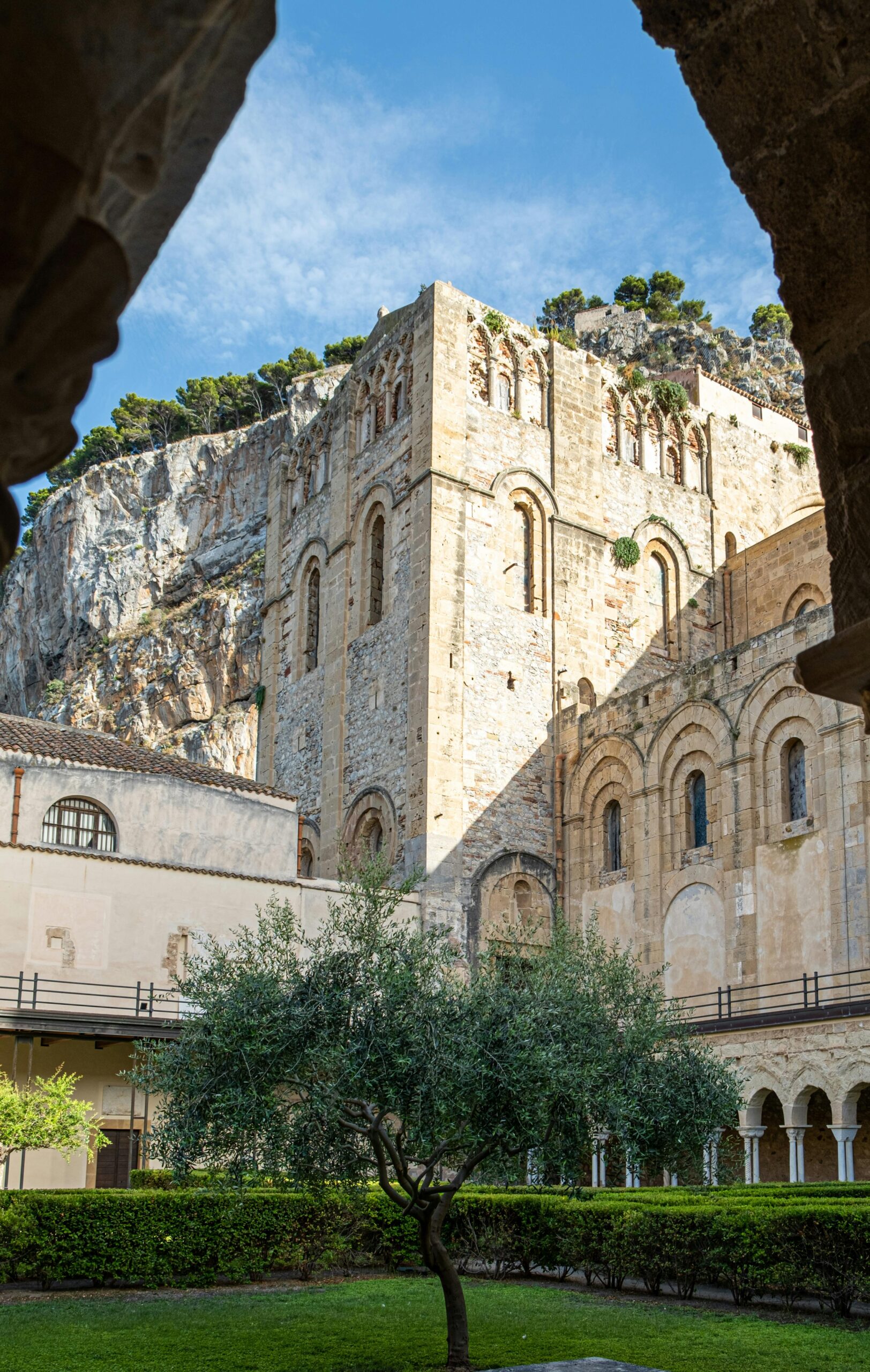
The Cathedral
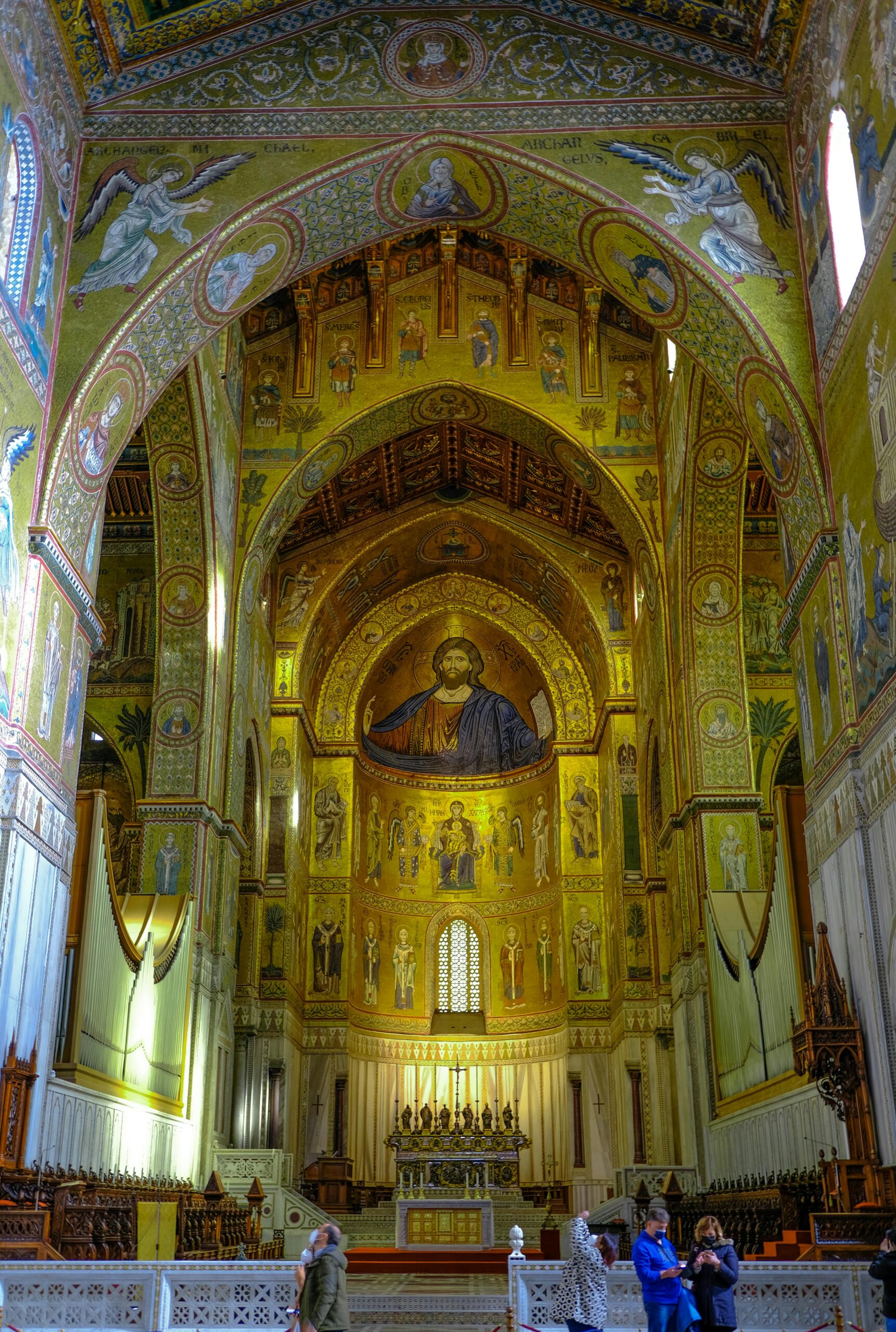
Il Duomo di Monreale, costruito nel 1174 per volontà di Guglielmo II d’Altavilla, è uno dei massimi capolavori dell’arte medievale mondiale.
Appena si varca la soglia, si viene avvolti da una luminosità che lascia senza fiato: più di 6.000 metri quadrati di mosaici ricoprono pareti, archi e absidi, raccontando la storia sacra con colori intensi e tessere d’oro che accendono lo spazio di una luce quasi mistica.
⏰ Orari visite: generalmente tutti i giorni
🎟️ Ingresso: gratuito
📍 Consiglio: se possibile, evita le ore centrali dei weekend: il Duomo è molto visitato. Mattino presto o tardo pomeriggio offrono un’atmosfera più calma e luminosa.
Benedictine Cloister
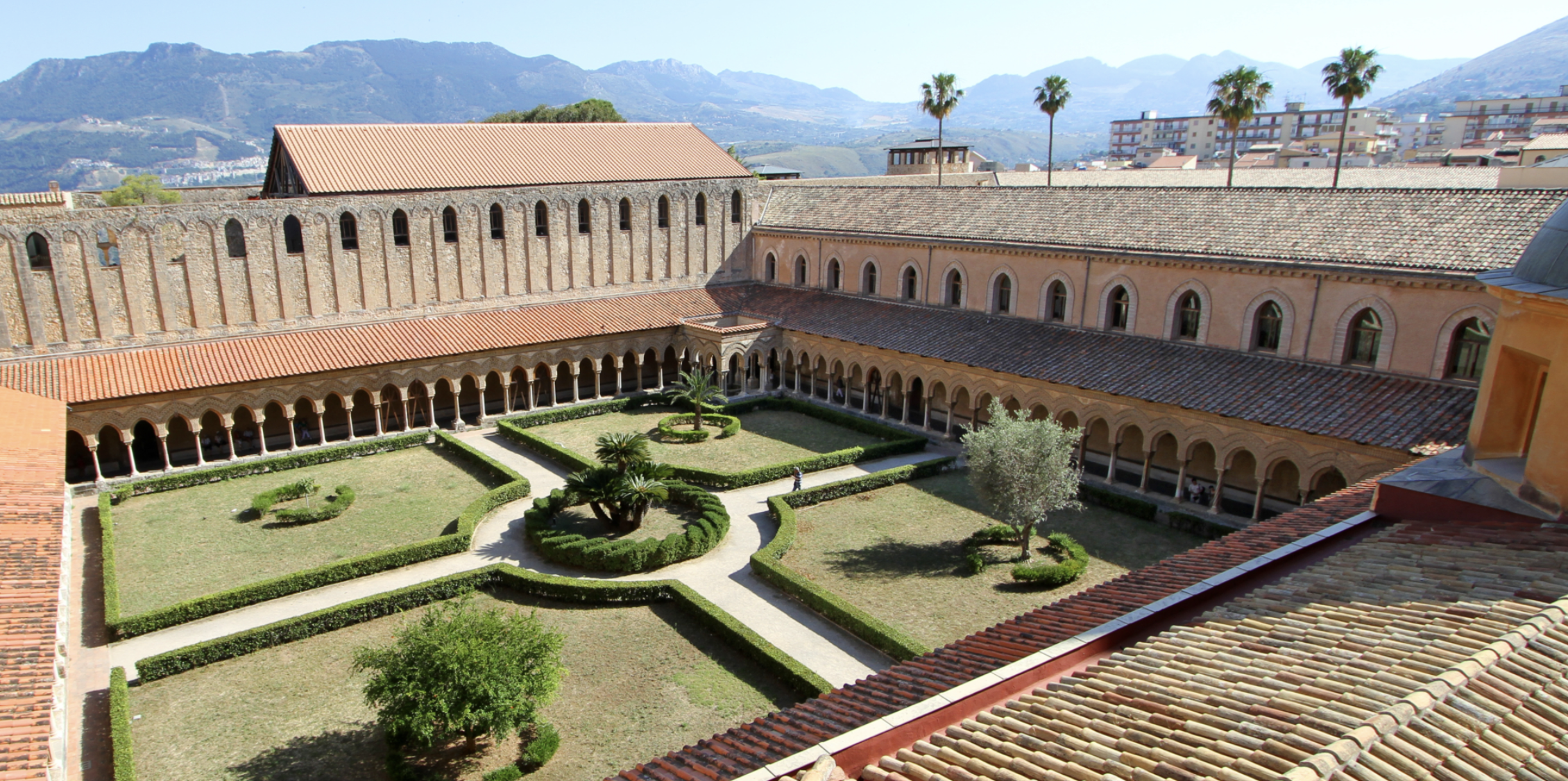
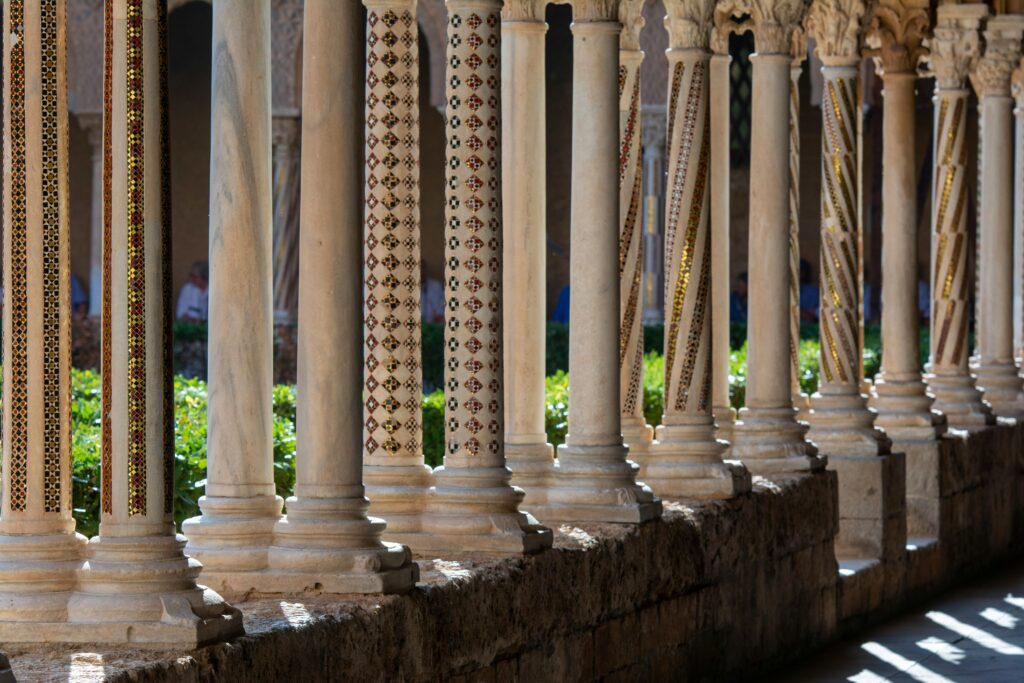
Accanto al Duomo si trova il Chiostro Benedettino, uno dei più eleganti del Medioevo. È un quadrato perfetto circondato da 228 colonne tutte diverse, scolpite con motivi orientali, biblici e naturalistici: un capolavoro dell’arte arabo-normanna.
Al centro, una fontana simbolica aggiunge quiete e armonia a questo spazio contemplativo.
🎟️ Prezzo: €6–7
⏰ Orari: aperto tutti i giorni, orari variabili.
📍 Consiglio: visita il chiostro dopo il Duomo; al pomeriggio la luce esalta le decorazioni
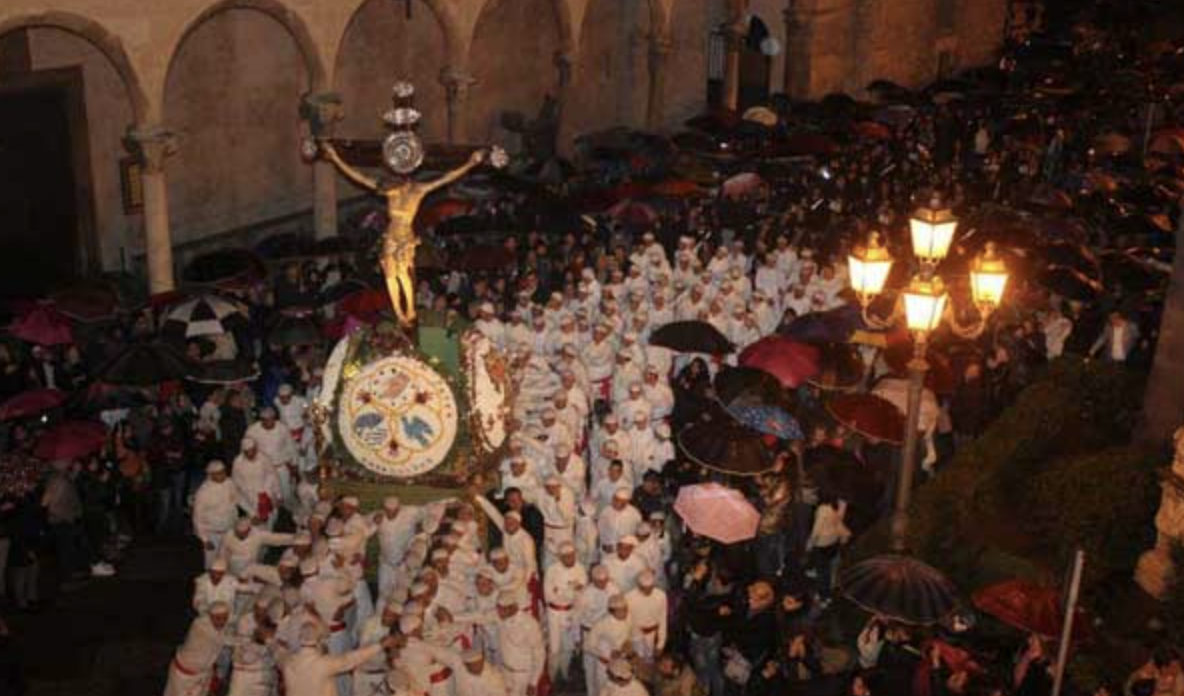
The Feast of the Most Holy Crucifix (May 3)
È la celebrazione più importante della città.
Per tre giorni Monreale si anima con:
- processioni solenni,
- bande musicali,
- luminarie,
- celebrazioni religiose molto partecipate.
La processione del Santissimo Crocifisso attraversa le vie del centro ed è uno dei momenti di maggiore devozione collettiva.
The cuisine of Monreale is closely linked to that of Palermo, from which it inherits flavors, traditions, and techniques rooted in the shared history of the two cities.
Just a few kilometers from the capital, Monreale has for centuries shared the same cultural influences—Arab, Norman, Spanish—that have shaped Palermo’s gastronomy.
Dishes such as sfincione, caponata, pasta with sardines, panelle, and ricotta and almond desserts are also integral to the Monreale cuisine. Likewise, the use of citrus fruits, local oil, and aromatic herbs testifies to the culinary continuity of the Conca d’Oro, an agricultural area that has always united the two territories.
Monreale adds a more intimate and familiar touch to this tradition, linked to monastic life and the surrounding agricultural excellence. But its gastronomic identity remains profoundly Sicilian, whose heart beats in harmony with that of Palermo.
Check-in: a partire dalle ore 16:00
Check-out: entro le ore 10:00
ll check-in anticipato e il check-out posticipato sono gratuiti presso questa villa, in base alla disponibilità.
Vietato fumare
Animali non ammessi
Ospiti extra non ammessi
Non è permesso organizzare feste o eventi
I costi di eventuali danni verranno dedotti dal deposito cauzionale