
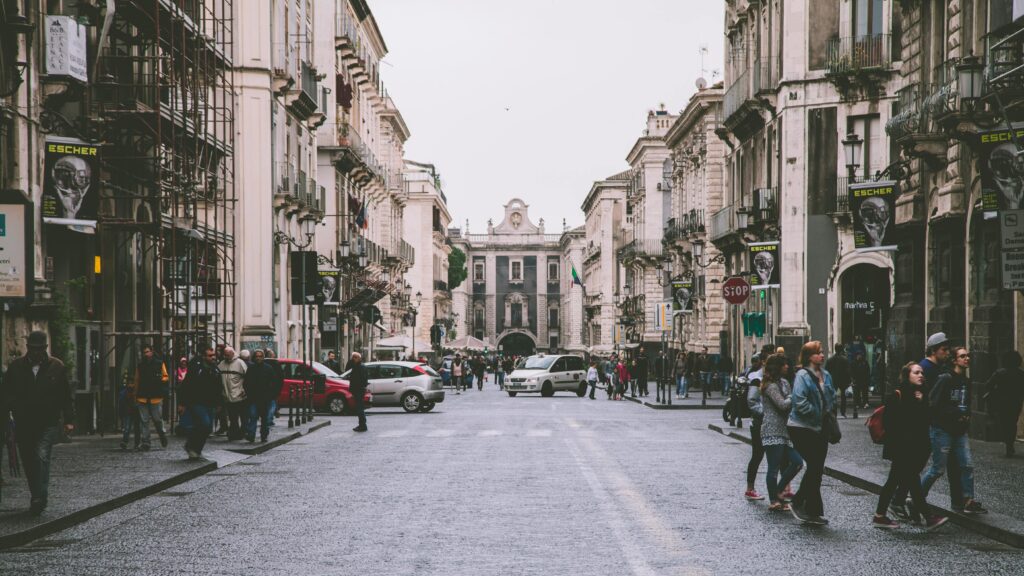
Catania is a city of fire and sea, of powerful contrasts and overwhelming beauty. At the foot of the imposing Mount Etna, the volcano that dominates the city like an eternal guardian, Catania vibrates with energy, history, and passion. It is a city that never sleeps: noisy, bright, and alive.
Catania was founded in 729 BC by Greek colonists from Chalcis. Imagine a small polis overlooking the sea, the scent of citrus fruits already in the air and merchants trading wine, oil, and ceramics.
The Greeks called it Katánē, and even then the city was a crossroads of cultures, a bridge between East and West.
With the Romans, Catania became opulent: theaters, baths, paved streets, and an amphitheater that could accommodate up to 15,000 spectators.
The Roman Theater, with its black stone steps, is still a leap back in time: sitting there means listening to the echoes of ancient tragedies and the applause that has never truly died away.
With the fall of the Roman Empire, Catania faced turbulent centuries: Byzantines, Arabs, Normans, Swabians, Aragonese… all coveted this strategic and fertile city.
The Arabs brought new agricultural systems and a refined culture; the Normans built the Ursino Castle, a symbol of power; the Swabians of Frederick II made Catania an important cultural center.
And then there is her: Saint Agata, the patron saint.
Her martyrdom in the 3rd century AD transformed the young woman from Catania into an eternal symbol of resistance and faith. The city still lives under her protection, and every February Catania becomes a river of devotion.
If there is a place where nature writes history with the force of fire, it is this: in 1669, Mount Etna unleashed a huge lava flow that reached Catania, engulfing houses, fields, and even part of the Ursino Castle.
The lava forever changed the city’s geography, but the people of Catania—stubborn as lava stone—immediately began again.
In 1693, a devastating earthquake almost completely erased ancient Catania.
And it was precisely then that the city arose in a new guise: the Catania Baroque, now a UNESCO World Heritage Site.
A different Baroque style from that of Palermo: darker, more theatrical, more dramatic—the product of lava and necessity.
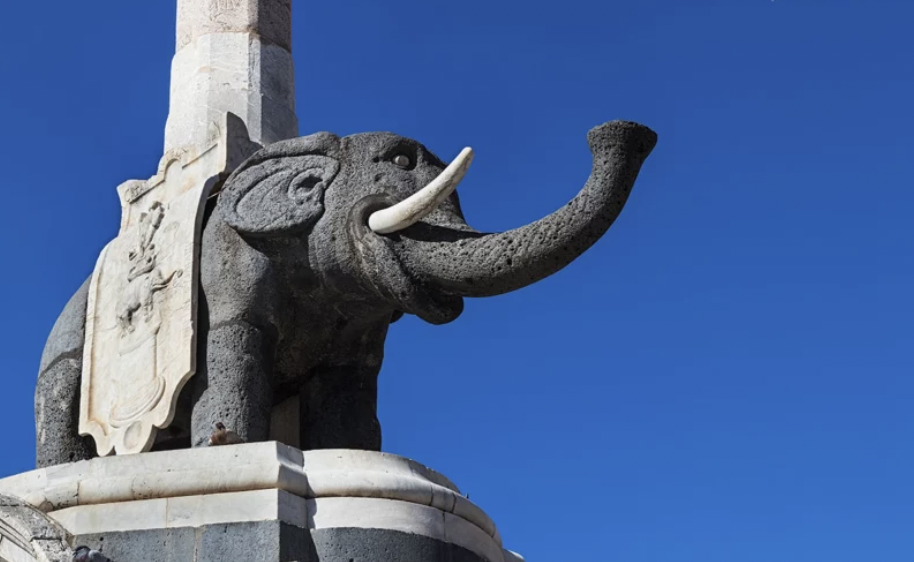
Thanks to bishops, architects, and enlightened nobles, Catania became one of the most modern cities in the Kingdom of Sicily. Etnea street, the elegant and scenic backbone of the city, was born; Duomo square, with the lava stone elephant, “u Liotru,” a beloved symbol; Baroque palaces, with facades carved like embroidery; and the Benedictine Monastery, one of the largest monastic complexes in Europe.
And in the end, Catania remains like this: a city born from fire and alive with light, capable of reinventing itself time and time again, transforming its wounds into beauty and its courage into history.
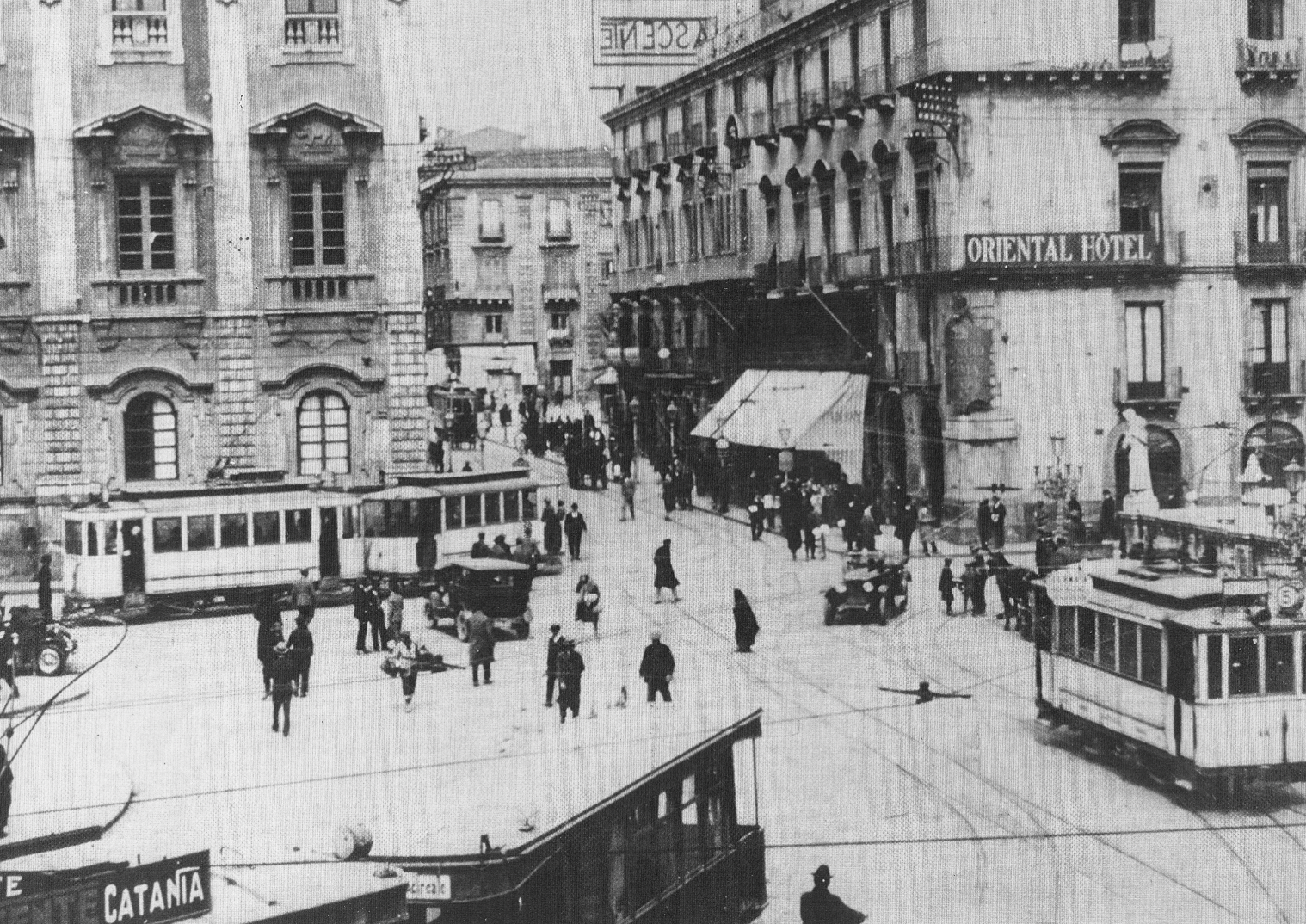
Duomo square and the Cathedral of Saint Agata
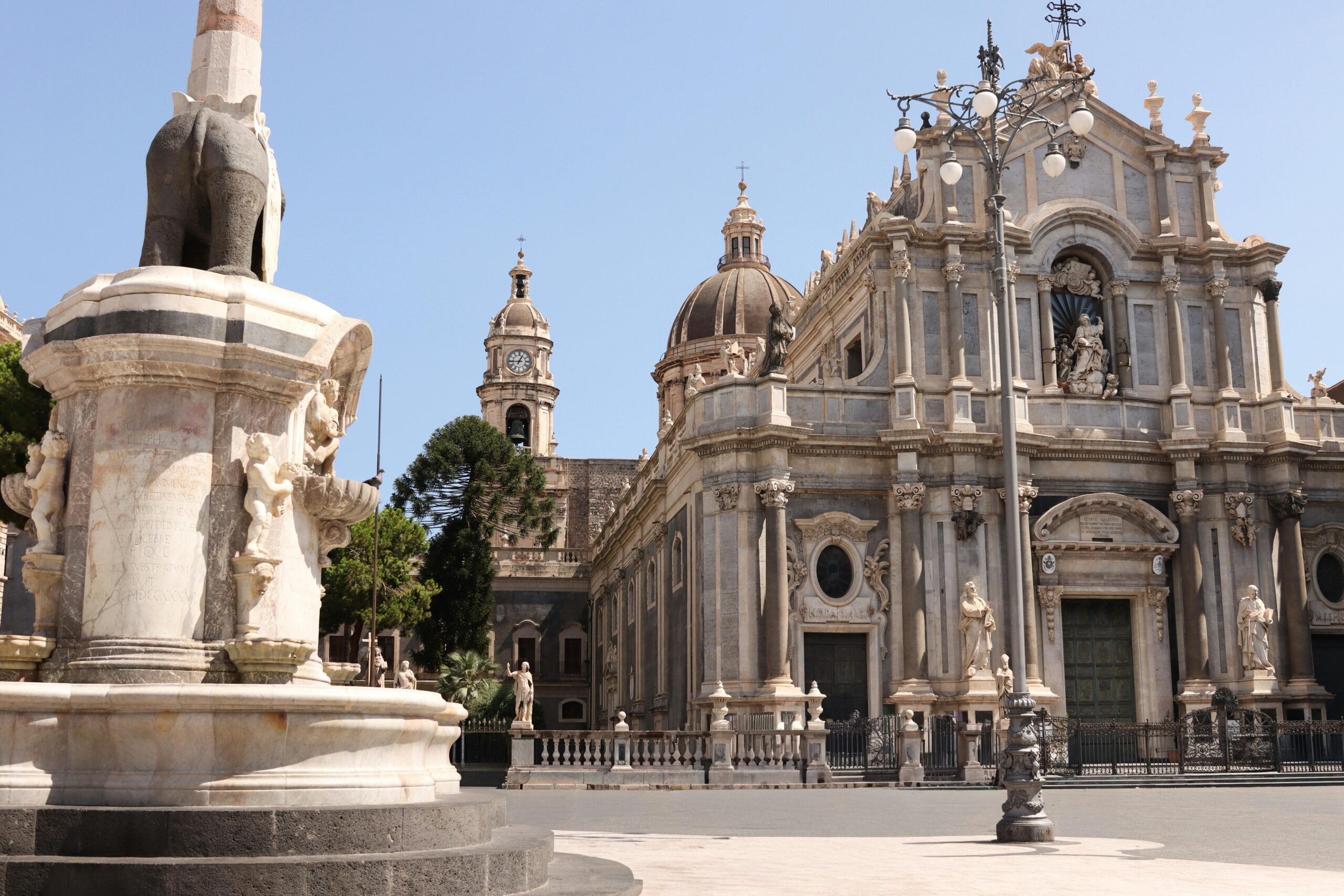
The Cathedral of Saint Agata, in the heart of Catania’s Duomo square, is the religious and spiritual symbol of the city, dedicated to its patron saint. Built in the Norman era (11th century) on the ruins of the ancient Achillian Baths, it was rebuilt after the 1693 earthquake in perfect Catanian Baroque style, with its white marble façade standing out against the black lava stone.
Inside, it houses the sarcophagus of Saint Agata, precious relics, and works of art that recount centuries of faith. Don’t miss the Chapel of the Saint, and for history buffs, the underground area with the remains of the Roman baths.
⏰Opening hours: daily 7:15–12:30 and 16:00–19:00 (Sundays from 7:45).
🎟Free admission, with small contributions for guided tours or special itineraries.
📍Tip: Visit the cathedral early in the morning to enjoy the quiet and the light filtering through the naves; then stop in the churchyard to admire the baroque façade, the Elephant Fountain, and the vibrant life of the square: the true heart of Catania.
Mount Etna
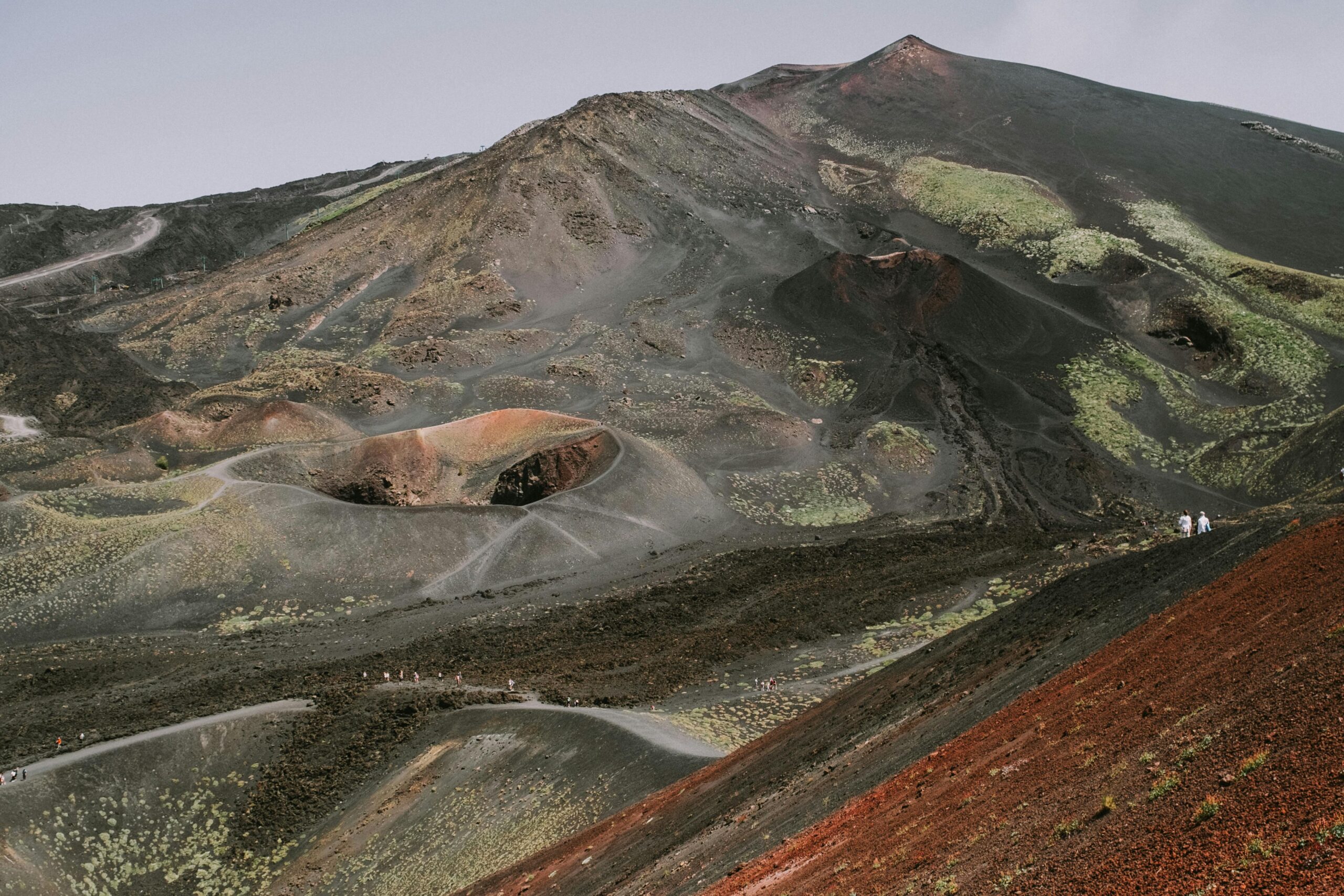
Mount Etna, Europe’s highest active volcano (over 3,300 meters), dominates eastern Sicily with its power and primordial beauty. Climbing its slopes means walking on ancient lava flows, amidst lunar landscapes and breathtaking views that extend all the way to the Ionian Sea.
Access: From Rifugio Sapienza (Nicolosi), a cable car and 4×4 vehicles depart for up to 2,900 meters.
🎟Approximate prices: from €30 for the cable car to €70-€140 for guided excursions to the summit craters.
⏰Hours: Open from 8:30 am to 4:30/5:00 pm, variable depending on the season and weather conditions.
📍Tips: Leave early in the morning, wear hiking boots, and dress in layers: the weather changes rapidly at high altitude. Always check the volcano’s conditions before climbing.
Climbing Mount Etna is an experience that goes beyond a visit: it is experiencing the essence of Sicily, where earth and fire intertwine in a spectacle unlike any other.
Crociferi Street
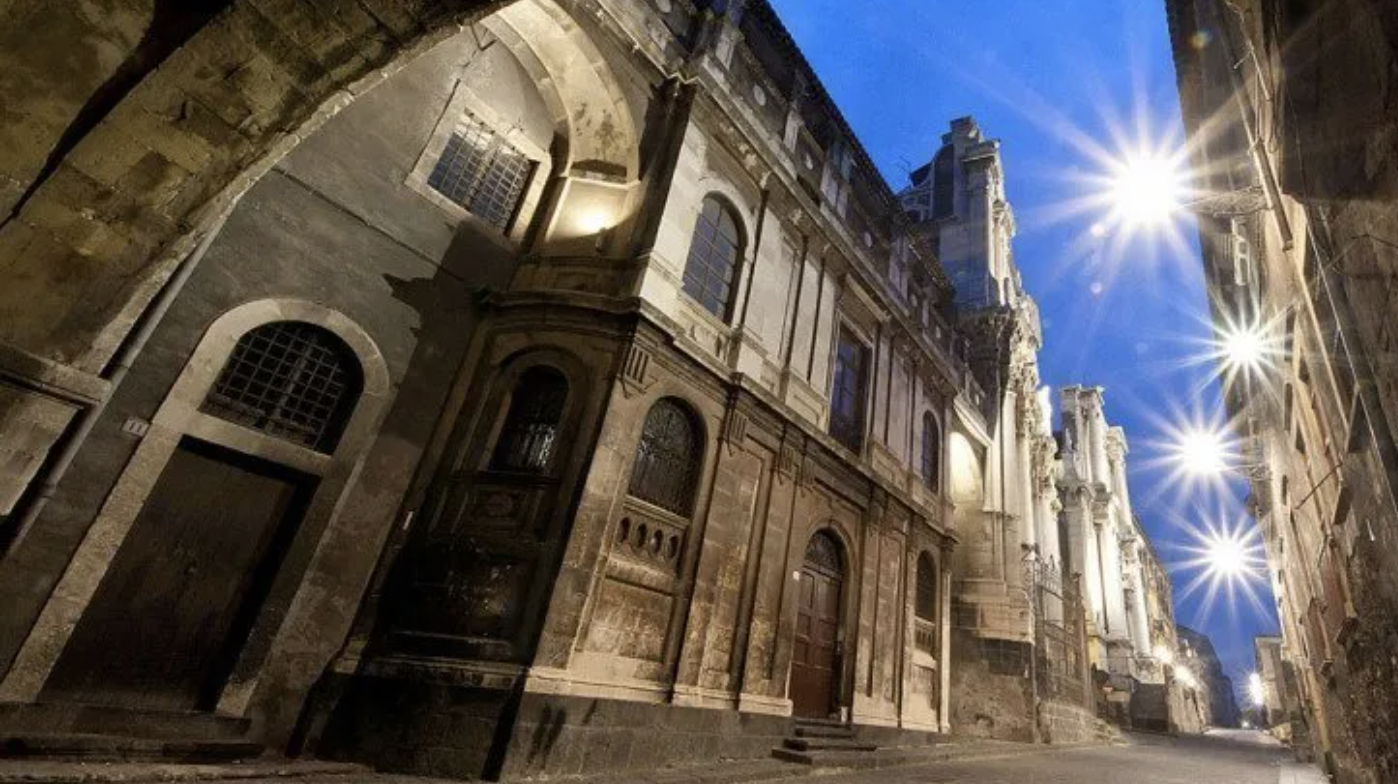
Crociferi street is the heart of Catania’s Baroque architecture, one of the most elegant and evocative streets in Italy. Just 400 meters long, it is a true jewel of 18th-century architecture, where churches and monasteries stand side by side in a perfect balance of lava stone and white marble.
Among the must-sees: the Arch of San Benedetto, the Church of San Giuliano with its convex façade, and the splendid Staircase of the Angels of the Church of San Benedetto.
🎟Free access all day, ideal for visiting in the morning or at sunset, when the light enhances the details of the façades. Wear comfortable shoes and take the time to look around: every corner of Via dei Crociferi speaks of Catania’s rebirth after the 1693 earthquake—a triumph of art, faith, and baroque harmony.
Fish Market
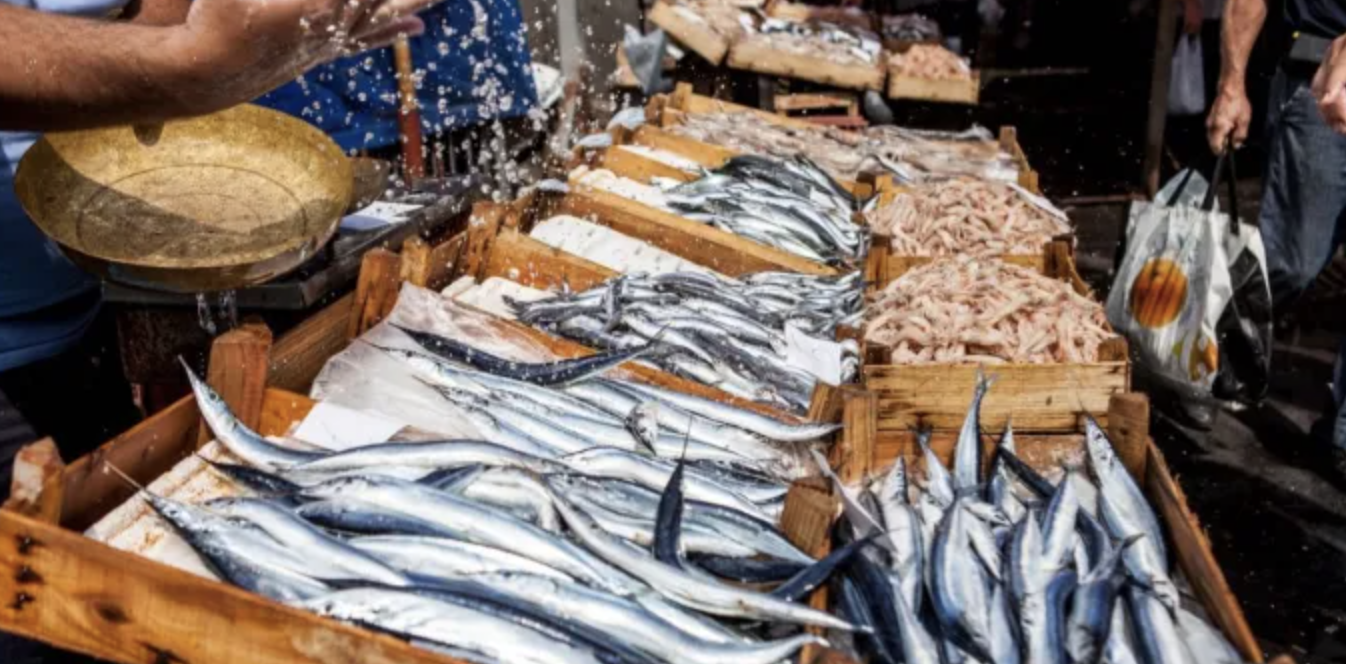
Catania’s Fish Market, or “a Piscaria“, is the city’s most authentic and vibrant hub. Located behind Duomo square, it’s an explosion of voices, aromas, and colors: fishermen calling out their offerings, stalls overflowing with tuna, swordfish, shrimp, and mussels, in a chaotic and captivating atmosphere.
Don’t miss: sample fried fish or fresh oysters in the small eateries surrounding the market, and admire the scene from the top of the Pardo street bridge.
⏰Hours: Mon–Sat 7:00–14:00 | 🎟️ Free admission
📍Tip: Go early in the morning for the most authentic experience. ‘A Piscaria isn’t just a market, it’s the beating heart of Catania’s popular streets—loud, authentic, and vibrant.
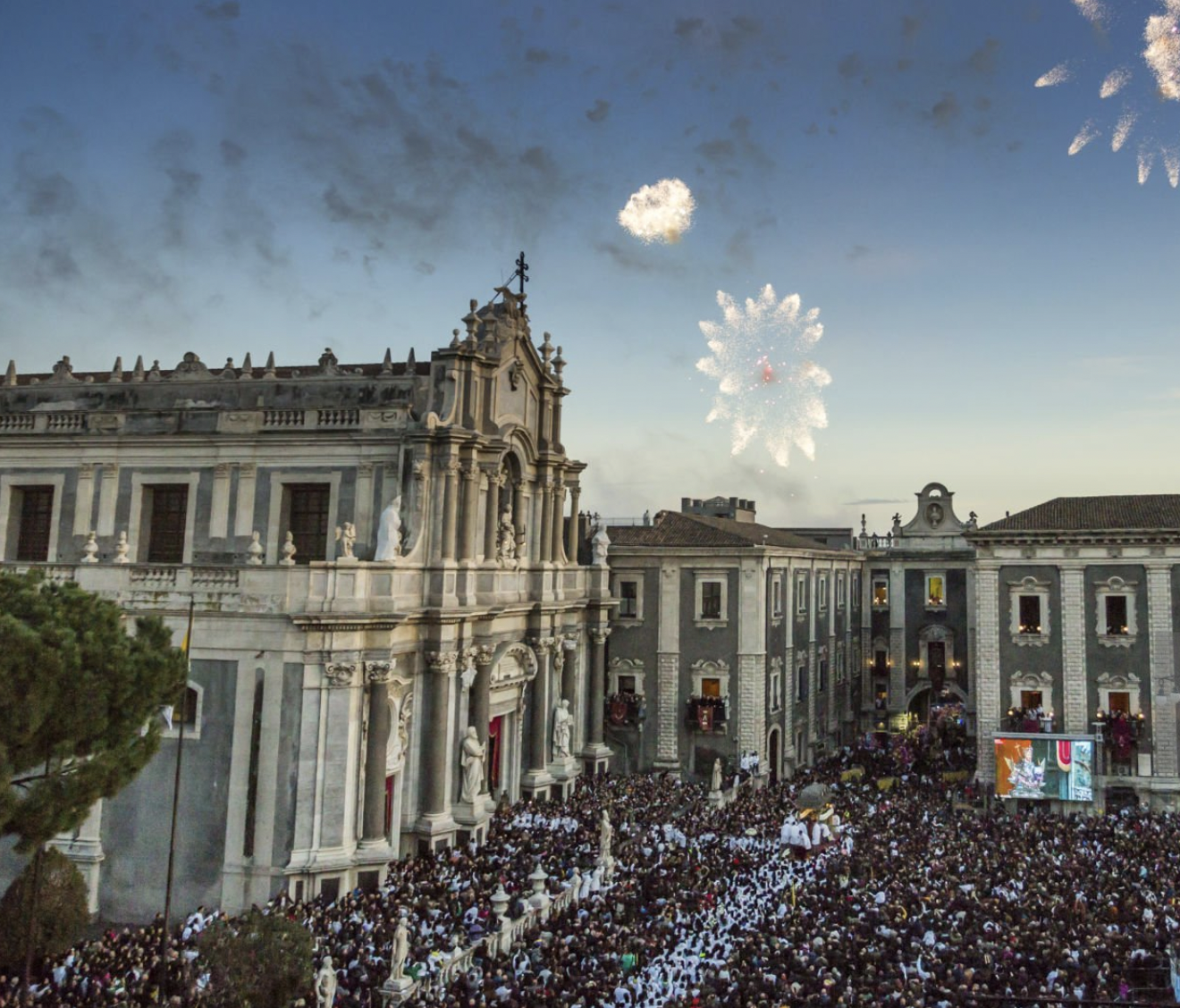
The Feast of Saint Agata (February 3-5)
The Feast of Saint Agatha is the third-largest religious festival in the world and is characterized by several iconic moments:
- ‘A Sira o’ Diu: the nighttime procession with the silver fercolo illuminated by thousands of candles.
- The “Cammaredda”: the veil and the reliquary habit of the Saint displayed to the faithful.
- The Ascent of San Giuliano: the most emotional moment, when devotees run dragging the fercolo up the hill.
- U Focu, the great fireworks display on the eve.
It is a festival that unites faith, folklore, emotion, and a strong sense of belonging.
“U Liotru” – The Myth of the Elephant
More than a celebration, a legend lived daily.
The name Liotru derives from Heliodorus (‘Liodoru in Sicilian), an 8th-century figure determined, at least according to tradition, to become bishop of Catania.
However, the clergy preferred a more pious and respected man: Saint Leo.
Heliodorus, his pride wounded, then devoted himself to magic and forbidden arts, becoming a restless yet fascinating figure.
Legendary chronicles tell of him making a pact with mysterious forces, thanks to which he made objects appear and disappear, performed miracles, and, above all, created a magical elephant made of volcanic stone.
According to legend, Heliodorus used the elephant to travel quickly between Catania and Constantinople.
It is said that the Liotru was able to lift itself from the ground, travel great distances in an instant, and protect Heliodorus from his enemies.
The people, fascinated and frightened, began to speak of dark arts, and thus Heliodorus was accused of witchcraft and persecuted by the ecclesiastical authorities.
In the end, according to tradition, he was burned alive, and the elephant remained as a relic and symbol of his legend.
Musical Tradition: A Tribute to Vincenzo Bellini
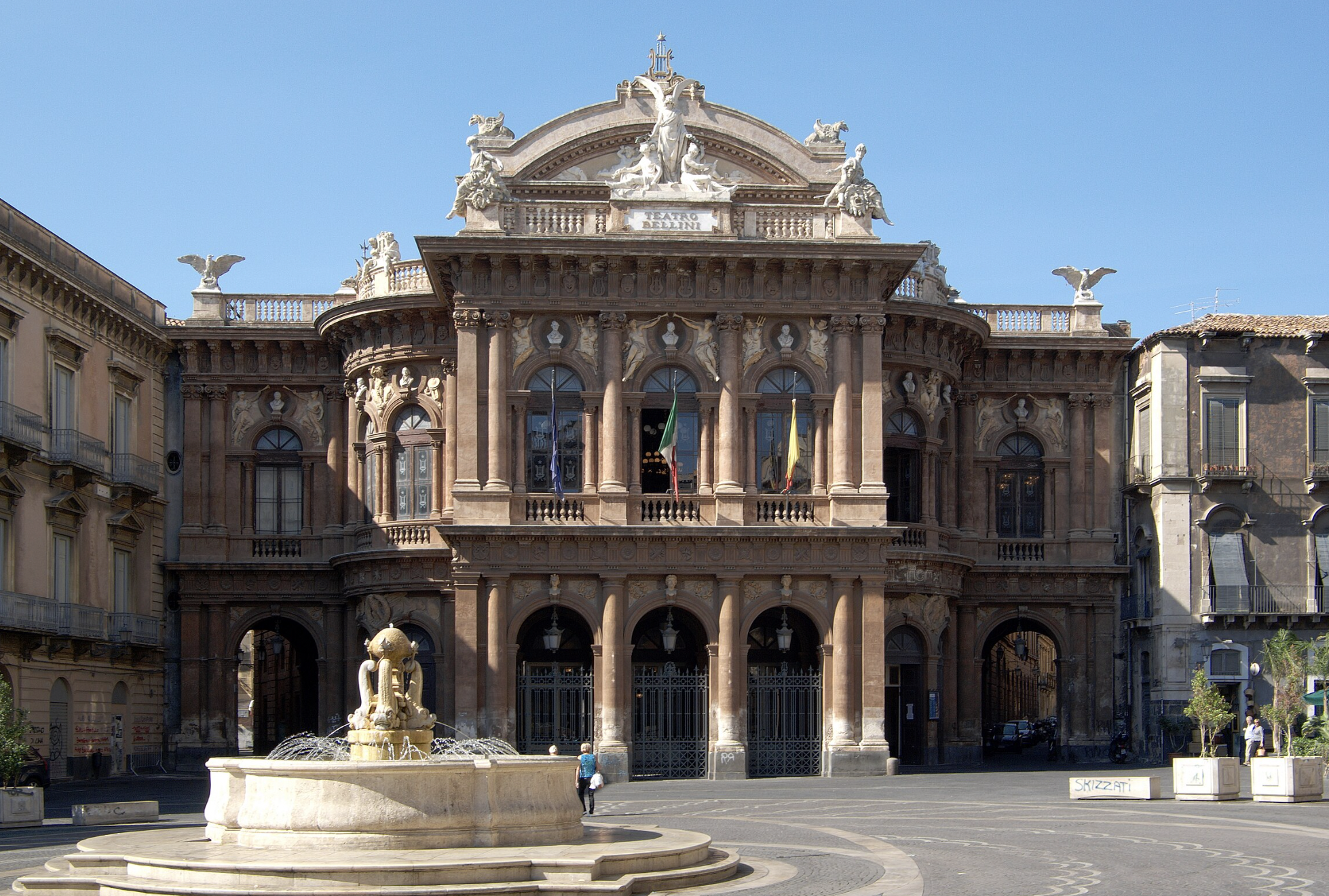
Catania is the birthplace of composer Vincenzo Bellini. Annual celebrations include concerts at the Teatro Massimo Vincenzo Bellini, opera events, and cultural events in his name. Music here is an integral part of the city’s identity.
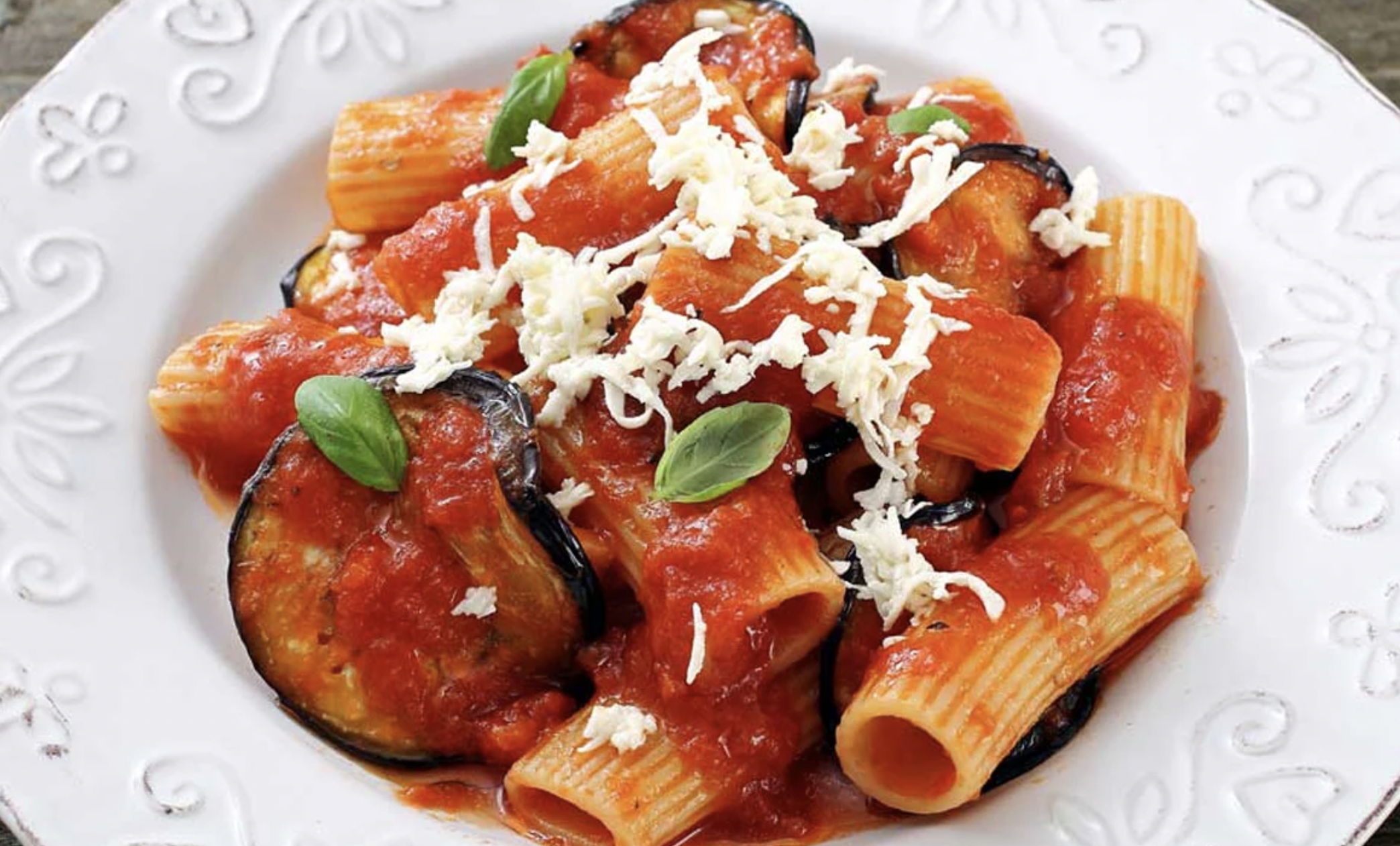
Catanian cuisine is distinguished by its influences and its ability to combine diverse ingredients. Catanian cuisine is a vibrant cuisine, strongly influenced by Arab-Norman culture: it frequently uses both dark-colored foods, such as eggplant, black olives, and spices, as well as products reminiscent of Arab traditions, such as raisins, dried fruit, and cinnamon.
Pasta alla Norma
The quintessential Catania dish. Fried eggplant, fresh tomato, basil, and salted ricotta. Named after Vincenzo Bellini’s opera “Norma,” because its deliciousness—it seems—was “absolutely perfect”
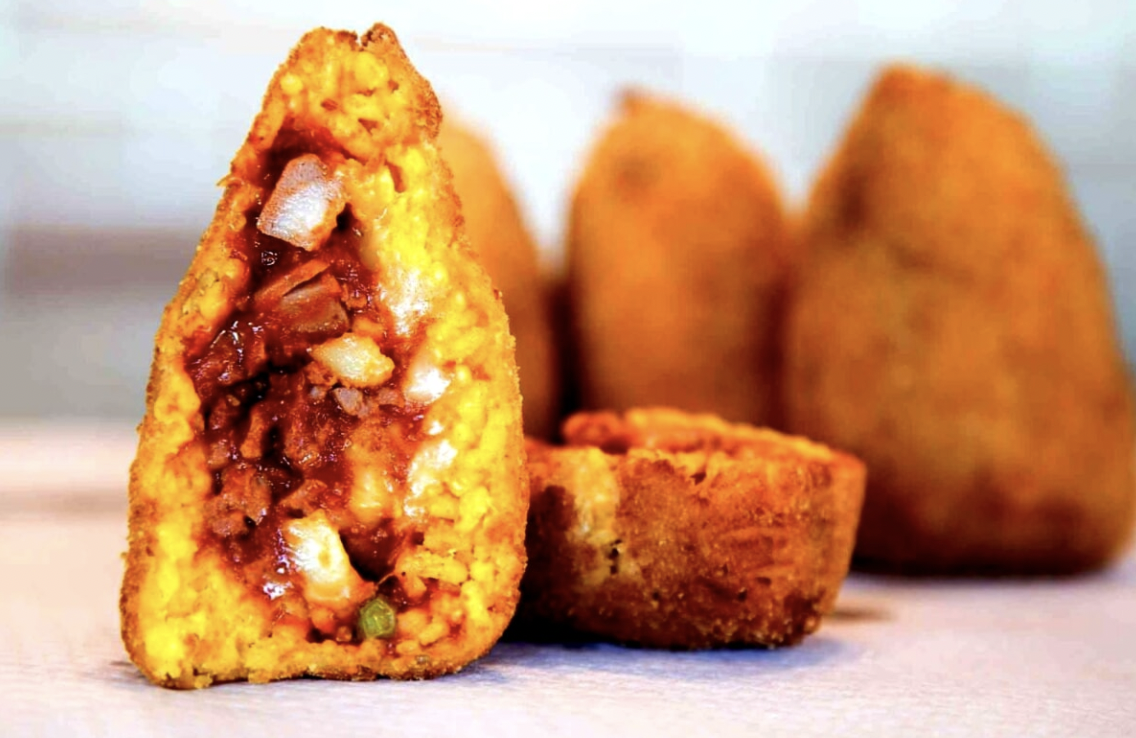
The Catanese arancini (masculine)
In Sicily, there’s a relentless conflict that, instead of hurting, makes you hungry. It’s the legendary dispute between Palermo and Catania over the name of the queen of Sicilian street food.
In Palermo, they call it “arancinA“, feminine: round like an orange, golden, soft, and perfect. In Catania, however, it’s “arancinO“, masculine: conical like Mount Etna, proud, pointed, and full of personality.
Each city defends its own version with epic pride: the people of Palermo claim tradition and the round shape, while the people of Catania extol the “volcanic” tip and the bold character of their arancino.
But the truth is that this “conflict” is one of the island’s most endearing stories: an ironic, playful rivalry that unites rather than divides. Because, in the end, only one thing is certain in Sicily: whether it’s called arancina or arancino… it’s always a marvel to eat.
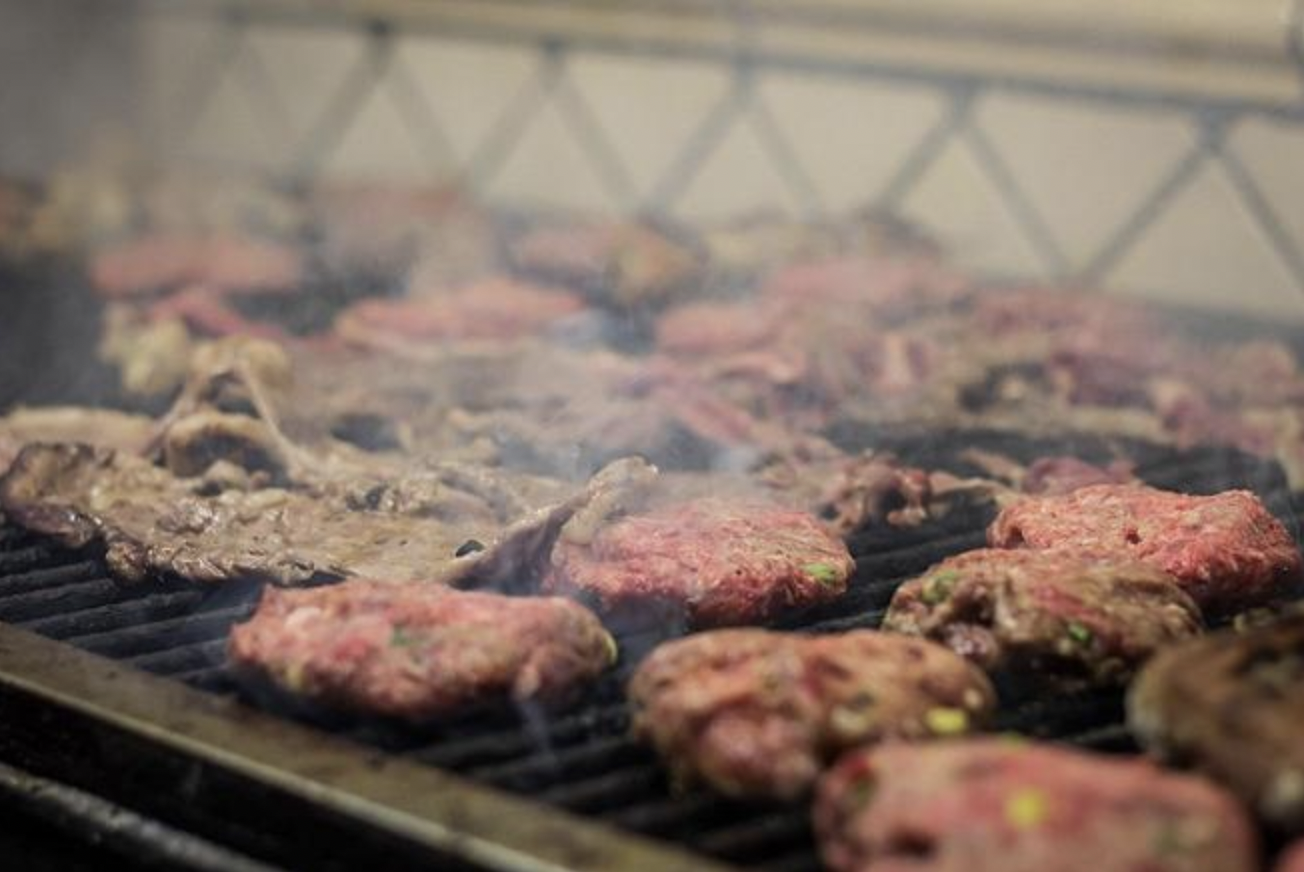
Horse meat
If there’s one food that truly expresses Catania’s direct, warm, and slightly rebellious character, it’s horse meat.
It’s not just a simple dish: it’s a defining tradition, a popular ritual that has enlivened the city’s grills, streets, and summer evenings for decades.
Horse meat has been part of Catania’s gastronomic culture since the 19th century.
It was considered a noble, high-protein meat, perfect for those who worked in the fields or ports. It was a dish accessible to all social classes.
Over time, it has become the symbol of very informal dinners, chats with friends, and evenings spent together.
In the grills of the working-class neighborhoods—Picanello, Nesima, San Cristoforo, Librino—it’s a true social institution.
“Minne” of Sant’Agata
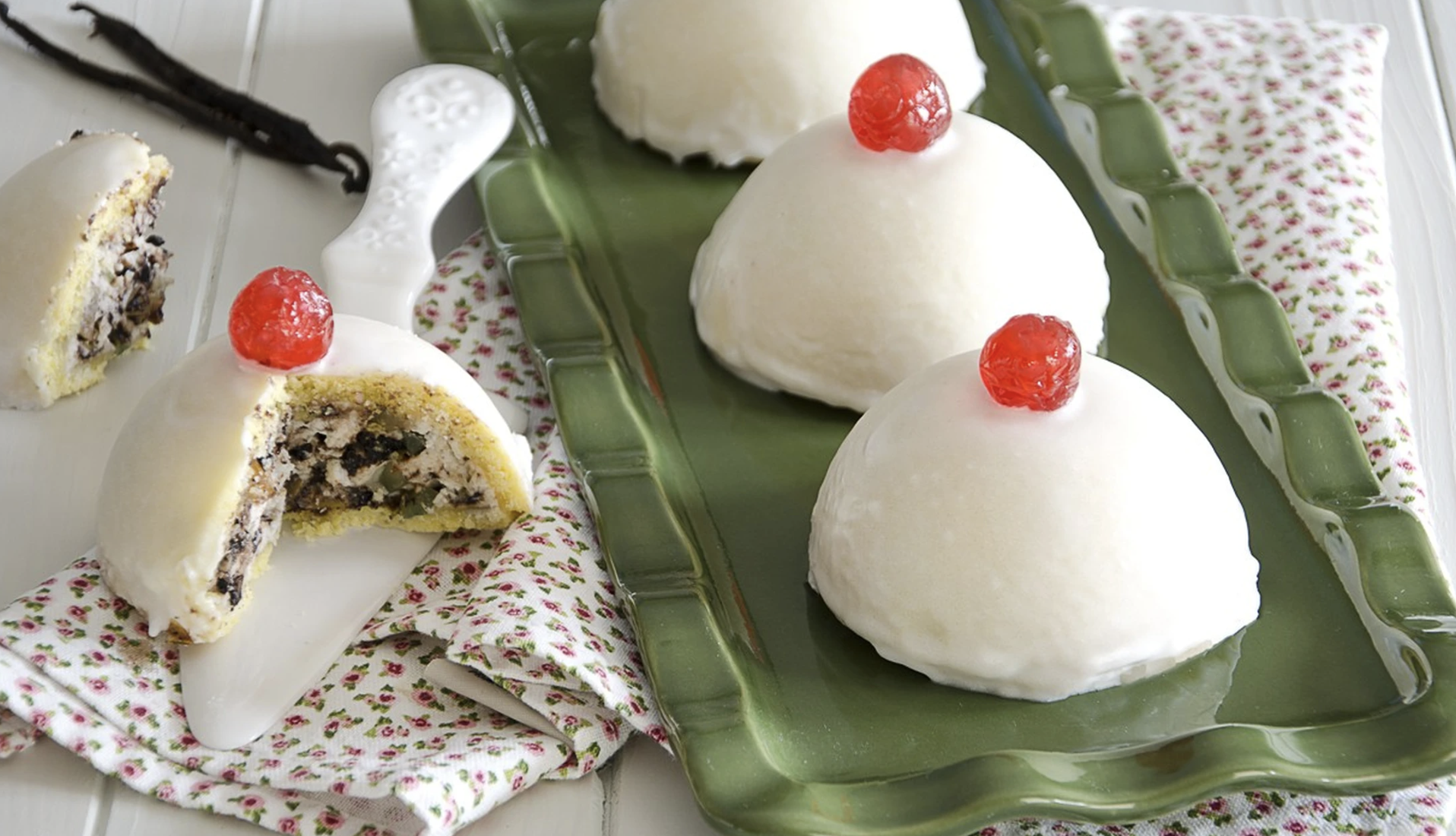
Among Catania’s most symbolic and distinctive desserts are the Minne di Sant’Agata. They are more than just pastries: they are an act of remembrance, a sweet and delicate tribute to the martyrdom of Catania’s patron saint, celebrated every year on February 5th.
The minne (or minnuzze) take the shape of Saint Agatha’s breasts, which, according to tradition, were amputated during the torture she suffered during the Roman persecution in the 3rd century.
The dessert was created to commemorate that sacrifice and the strength of the young woman from Catania, today a symbol of purification, faith, and protection for the city.
It is a small, single-serving cassata, elegant and white as a sacred vow. The ingredients are:
- sponge cake shell
- sheep’s milk ricotta sweetened with chocolate chips
- light flavored syrup (often with vermouth or orange blossom water)
- glossy white icing topped with a red dot in the center
- candied cherry, symbolizing the wound of martyrdom
Sant’Agata Olivette
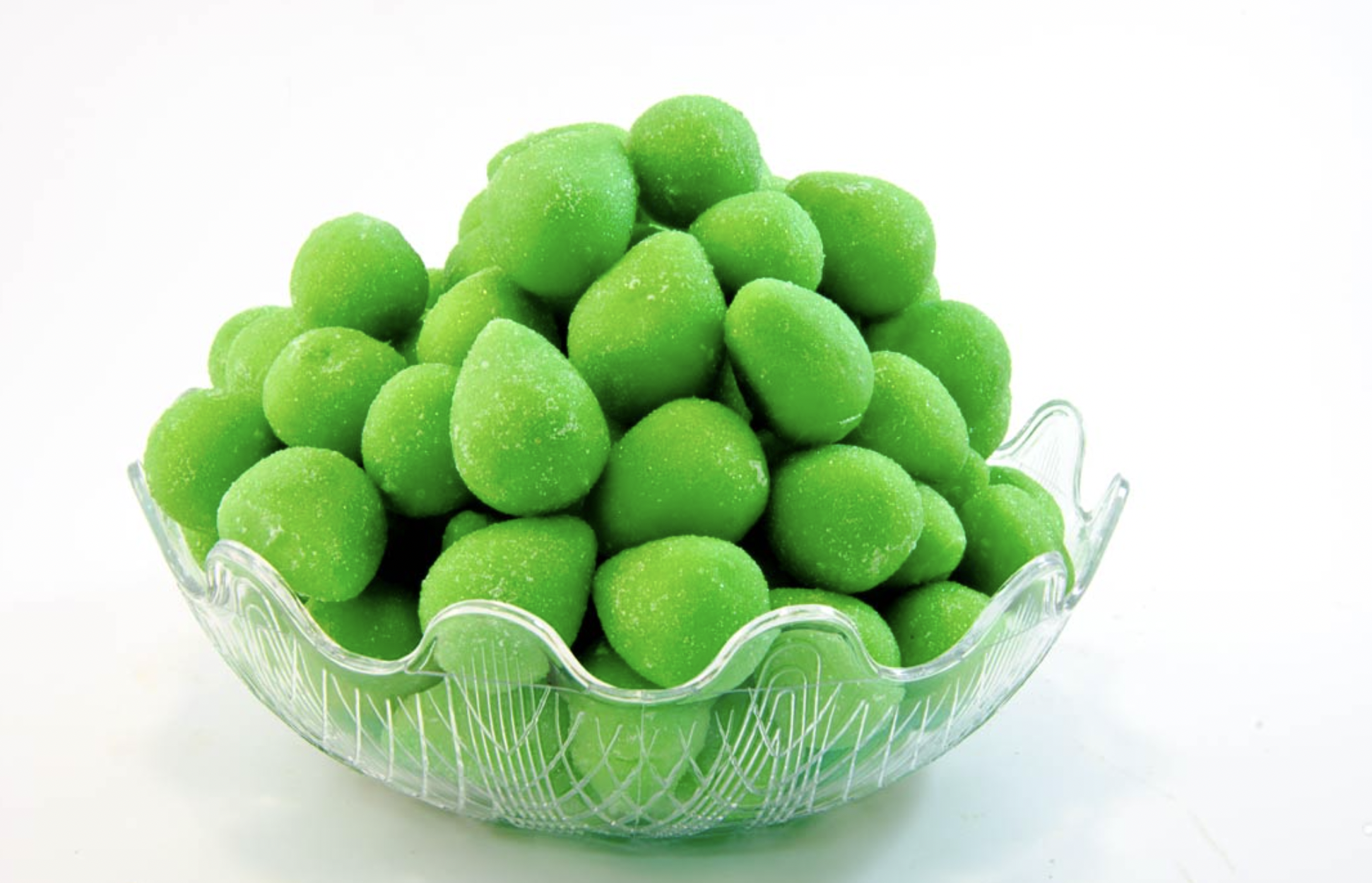
Small, green, sugary, and shrouded in an aura of legend: the Olivette of Saint Agata are among the most iconic sweets of the feast of Saint Agatha. Unlike the Minne, which commemorate martyrdom, these small delicacies tell a miracle of salvation, a story that has accompanied the devotion of the people of Catania for centuries.
It is said that Saint Agatha, while being led to martyrdom, stopped for a moment along the way to tie her sandal.
At that moment, an olive tree sprang from the earth where her foot had struck, miraculously growing to provide her with nourishment and comfort.
This is where the tradition of the “olivette” was born:
sweets reminiscent of the olives born from the Saint’s footsteps, a symbol of protection, peace, and hope.
It’s a simple yet meaningful dessert, made with:
- Almond paste
- Sugar
- Natural green coloring to evoke the fruit of the olive tree
- Often a very light hint of alcohol (like rosolio or vermouth)
The shape is that of a small olive, perfect in its simplicity.
When bitten, the texture is soft, velvety, and fragrant with almonds and tradition.
Pasta with pistachios
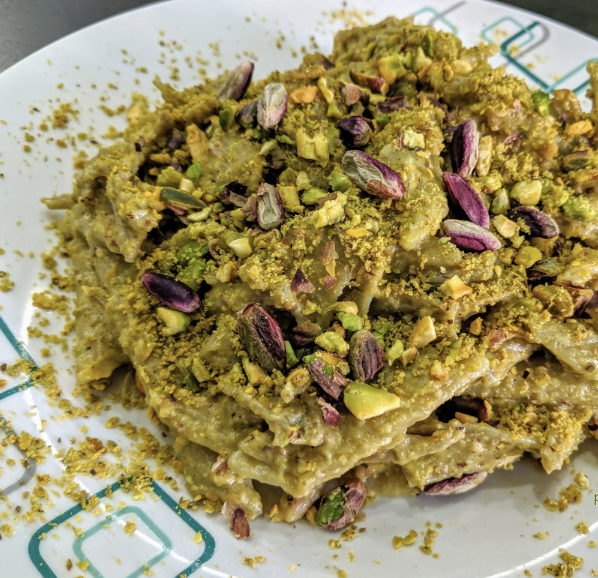
Pistachio pasta isn’t just a dish: it’s the most direct and sincere way to savor the soul of eastern Sicily.
And at the center of this gastronomic story is Bronte, a town nestled on the slopes of Mount Etna, home to the world’s most famous and prized pistachio, the “Green Gold.”
Bronte lives in symbiosis with Etna.
Pistachios grow on hard, black lava soil, rich in minerals: a harsh, almost hostile environment, yet precisely for this reason, capable of giving the fruit a unique, intense, and slightly wild aroma.
Pistachio pasta originated as a local recipe, but today it is one of the most iconic dishes of eastern Sicily. The most popular variations are those with speck or red prawns.
Check-in: a partire dalle ore 16:00
Check-out: entro le ore 10:00
ll check-in anticipato e il check-out posticipato sono gratuiti presso questa villa, in base alla disponibilità.
Vietato fumare
Animali non ammessi
Ospiti extra non ammessi
Non è permesso organizzare feste o eventi
I costi di eventuali danni verranno dedotti dal deposito cauzionale