
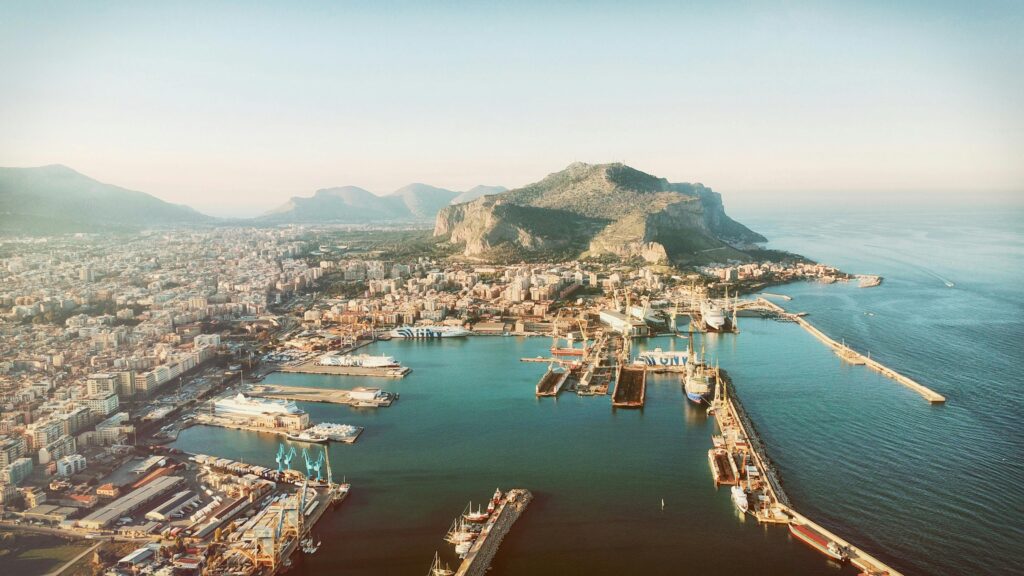
Palermo isn’t a city, it’s a story. It’s a web of peoples, languages, and scents that have met and blended for centuries, creating a mosaic unlike any other. Walking its streets means traversing different eras in just a few steps: from Arab charm to Norman splendor, from Baroque palaces to squares bustling with daily life.
Palermo’s history begins over 2,700 years ago, when the Phoenicians founded Zyz, “the flower.” They chose this luminous bay, at the foot of Mount Pellegrino, to make it a safe harbor and a crossroads of trade.
When the Greeks arrived, they called it Panormos, “all port,” a name that still today encapsulates its open, commercial, and hospitable nature.
Under the Romans, Catania became opulent: theaters, baths, paved streets, and an amphitheater that could accommodate up to 15,000 spectators.
The Roman Theater, with its black stone steps, is still a journey back in time: sitting there means listening to the echoes of ancient tragedies and the applause that has never truly faded.
The Romans and Byzantines expanded the city, but it was with the Arabs, in the year 831, that Palermo became an extraordinary jewel.
Under Islamic rule, Palermo became a splendid capital, dotted with gardens and palaces, as well as a thriving center of science, art, and commerce.
The Arabs built a system of canals and citrus groves, bringing agriculture, poetry, and refined architecture.
From that period, words, flavors, and an oriental charm remain, still felt today in the city’s markets.
In the 12th century the Normans arrived, and Palermo experienced one of the brightest moments in its history.
Under Roger II, the city became the capital of a multicultural kingdom where Arabs, Latins, Greeks and Jews coexisted, from whose encounter the marvelous Arab-Norman style, now a UNESCO World Heritage Site, was born.
The Swabians, with Frederick II, brought scientific spirit and poetry.
The Aragonese and then the Bourbons transformed Palermo into an aristocratic capital, rich in noble palaces, theaters, and monumental squares.
The eighteenth century was the age of elegance, which saw the birth of the Santa Cecilia Theater, the refined baroque palaces and villas of the Piana dei Colli, such as Villa Palagonia.
The nineteenth century saw popular revolts, political unrest, and the birth of the great Massimo Theater, one of the temples of European opera.
The last century was complex: wars, poverty, reconstruction. Palermo endured deep shadows, but in recent decades it has proudly responded to the challenges, rediscovering art, tourism, and its cultural vocation.
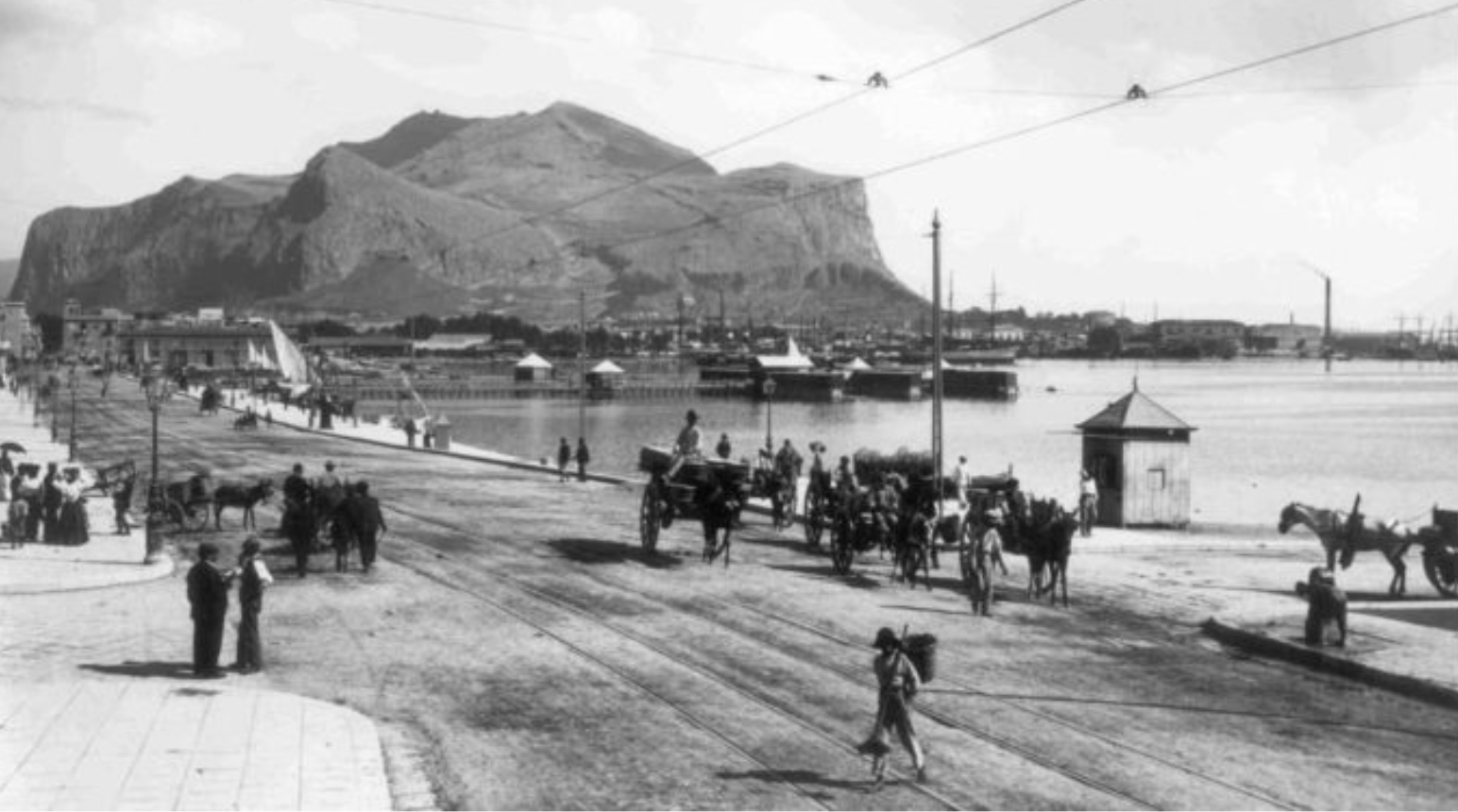
Strolling through the Quattro Canti, Ballarò, the Cathedral, the Massimo Theater, and the Foro Italico means traversing a thousand years of history in just a few steps. In this marvelous city, you can wander among Arab domes, Byzantine mosaics, Baroque palaces, and markets that resemble open-air theaters.
Palermo is a city that shouldn’t simply be visited: it should be listened to, breathed in, and let into your heart. And those who truly experience it discover that Palermo is unforgettable.
Teatro Massimo
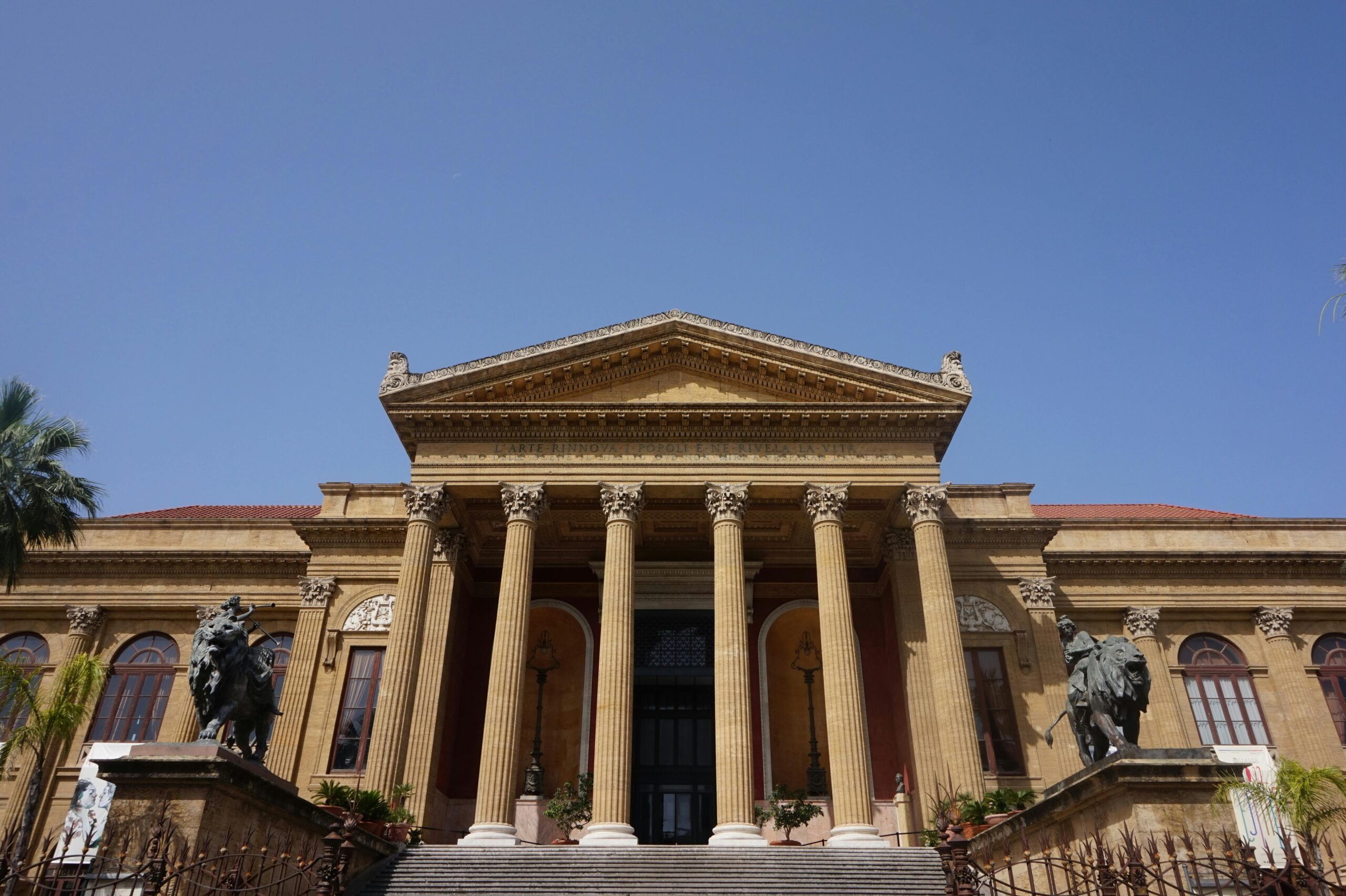
Palermo’s Teatro Massimo is a symbol of the city’s cultural elegance, a place where art and history meet in a timeless atmosphere. Located in Piazza Verdi, it dominates the scene with its monumental façade and the famous staircase that has served as the backdrop for films and stories, becoming one of Sicily’s most recognizable icons.
As soon as you approach, you sense the grandeur of a grand opera: neoclassical columns, imposing porticoes, and an entrance that seems to invite you on a journey through a 19th-century theater. Inside, the Great Hall surprises with red velvet, gold decorations, and acoustics considered among the best in the world. Every detail speaks to the dream of a city that, at the end of the 19th century, aspired to compete with the European music capitals.
⏰ Visiting hours: daily, generally 9:30–18:00 (variable depending on the season and shows).
🎟️ Entrance: Paid guided tour ticket; the exterior is always open to visitors.
📍Tip: Visit in the afternoon or at sunset, when the light turns the façade golden and the atmosphere truly magical. And if you have time, treat yourself to a show: the Teatro Massimo isn’t just for looking at, it’s for experiencing.
The Cathedral
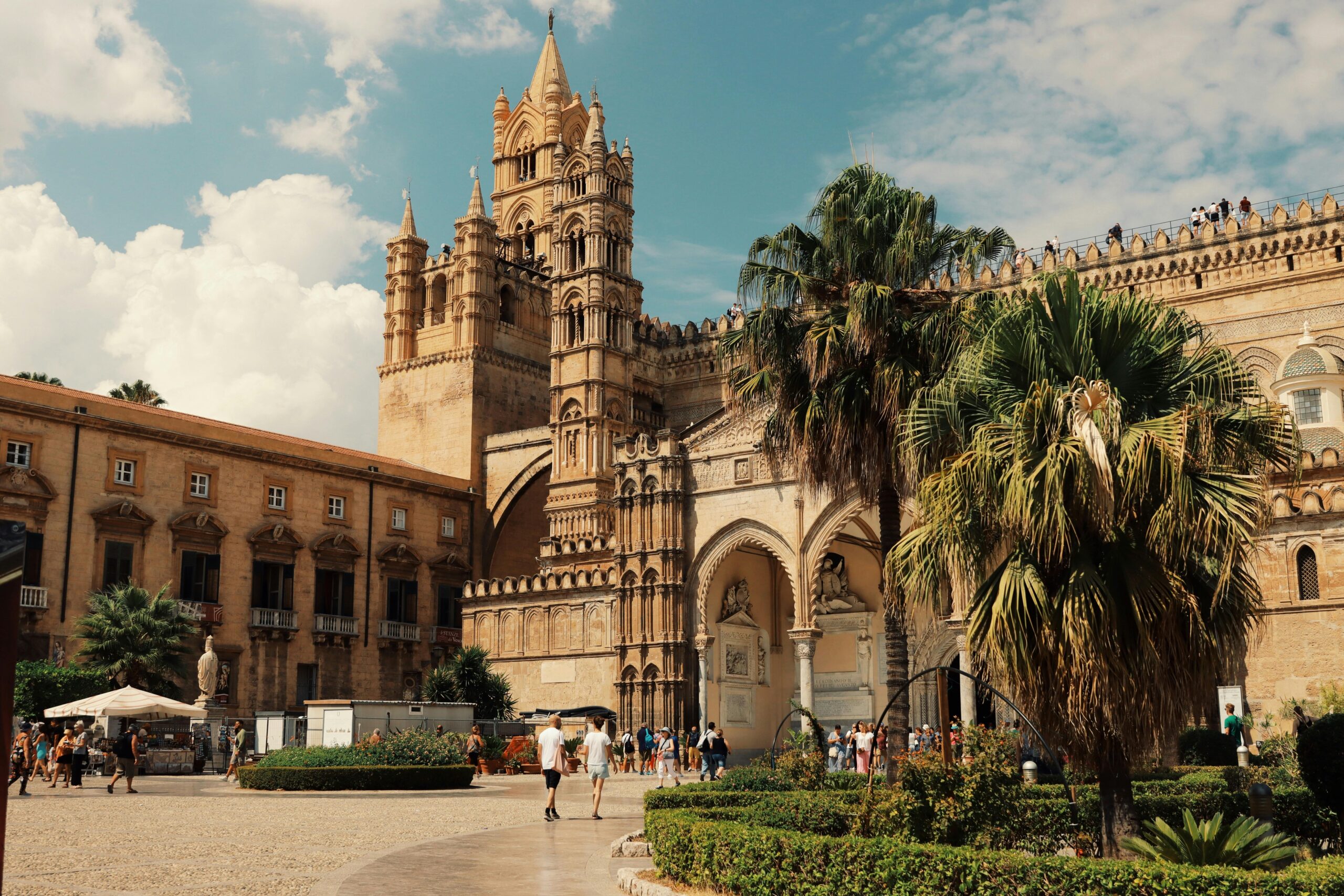
Palermo Cathedral is one of the most fascinating places in Sicily, a monument that tells over a thousand years of history in a single glance. Situated on Corso Vittorio Emanuele, it appears like a mirage of intertwined styles: Arab domes, Norman arches, Gothic details, and Baroque touches. It is the perfect symbol of the city, where different cultures have converged to create a unique beauty.
As soon as you approach, the façade is striking with its oriental geometry and imposing portico; upon entering, you sense a solemn atmosphere, almost suspended in time. Norman and Swabian rulers rest here, including Frederick II, the emperor known as “stupor mundi.” Climbing to the terraces offers one of the most incredible views of Palermo: red roofs, the sea in the distance, and Monte Pellegrino watching over the city.
⏰ Hours: Variable, but generally open daily with extended hours; terraces have staggered admissions.
🎟️ Admission: Free for the cathedral; paid admission for the royal tombs, treasury, and terraces.
📍Tip: Visit the cathedral early in the morning or around sunset: the stone takes on golden hues and the atmosphere becomes magical. And don’t miss the terraces: they’re one of the most breathtaking experiences in the city.
The Norman Palace and the Palatine Chapel
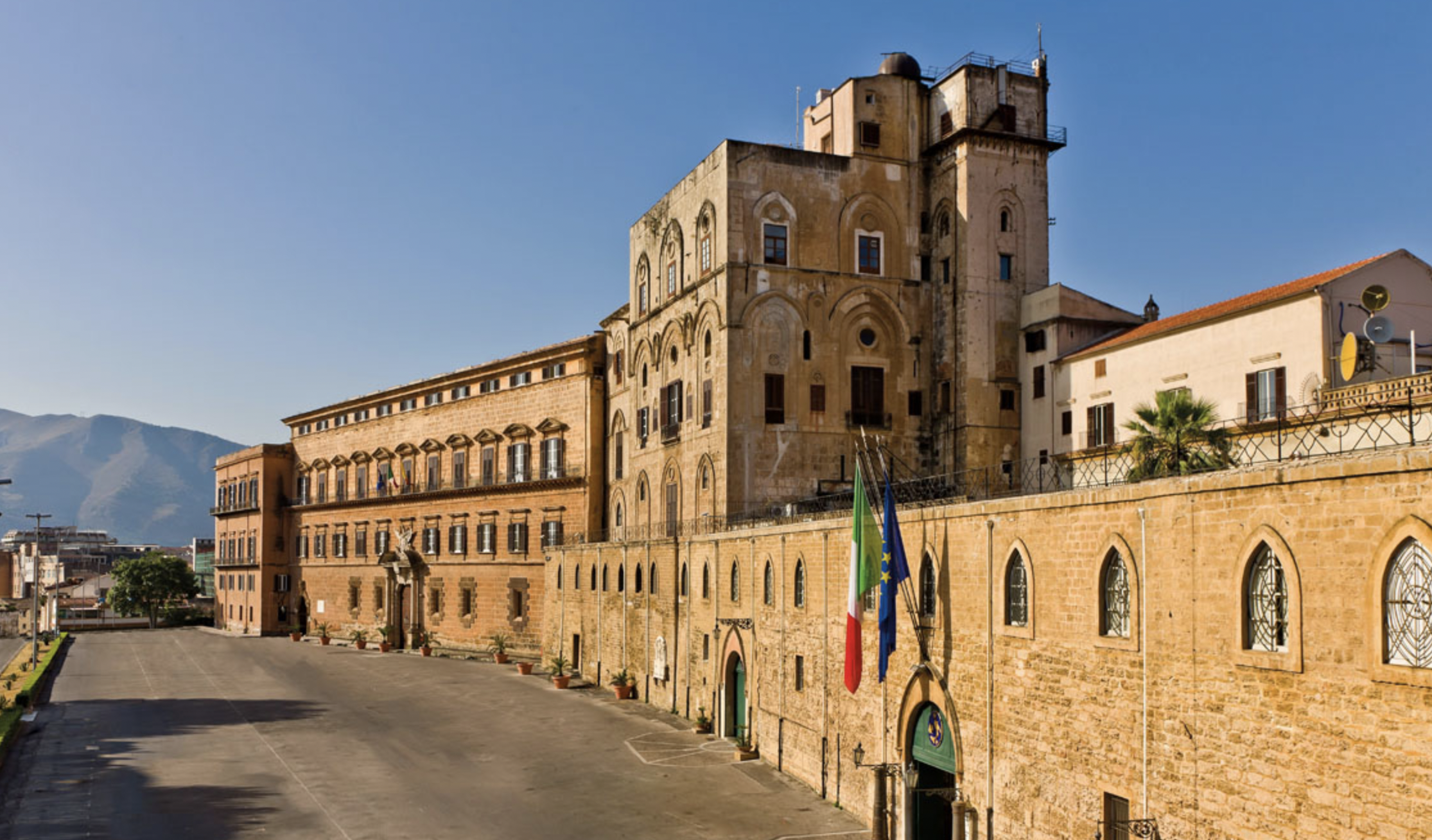
The Norman Palace, also known as the Royal Palace, is one of Palermo’s most extraordinary sites and the oldest royal palace in Europe still in use. Situated at the entrance to the Cassaro, it dominates the city with its thousand-year-old grandeur. Different civilizations intertwine here: Phoenicians, Romans, Arabs, Normans, and Swabians have all left their mark, creating an architectural masterpiece that is a living memory of Sicily.
Upon entering, you breathe in the atmosphere of the great medieval courts. But the true treasure lies upstairs: the Palatine Chapel, an absolute jewel of Arab-Norman art and a UNESCO World Heritage Site. The golden mosaics, the wooden muqarnas ceiling, and the light filtering through the shimmering tiles create a unique effect, a perfect bridge between East and West. It’s one of those places you never forget.
⏰ Opening hours: Open daily, subject to change depending on Parliament’s activities (some rooms may be closed).
🎟️ Entrance fee: fee, reservations recommended on weekends and during high season.
📍Tip: Visit the Palatine Chapel in the early morning: the golden light enhances the mosaics and allows for a more intimate experience. Also take some time to explore the outdoor courtyards, perfect for memorable photographs.
Quattro Canti
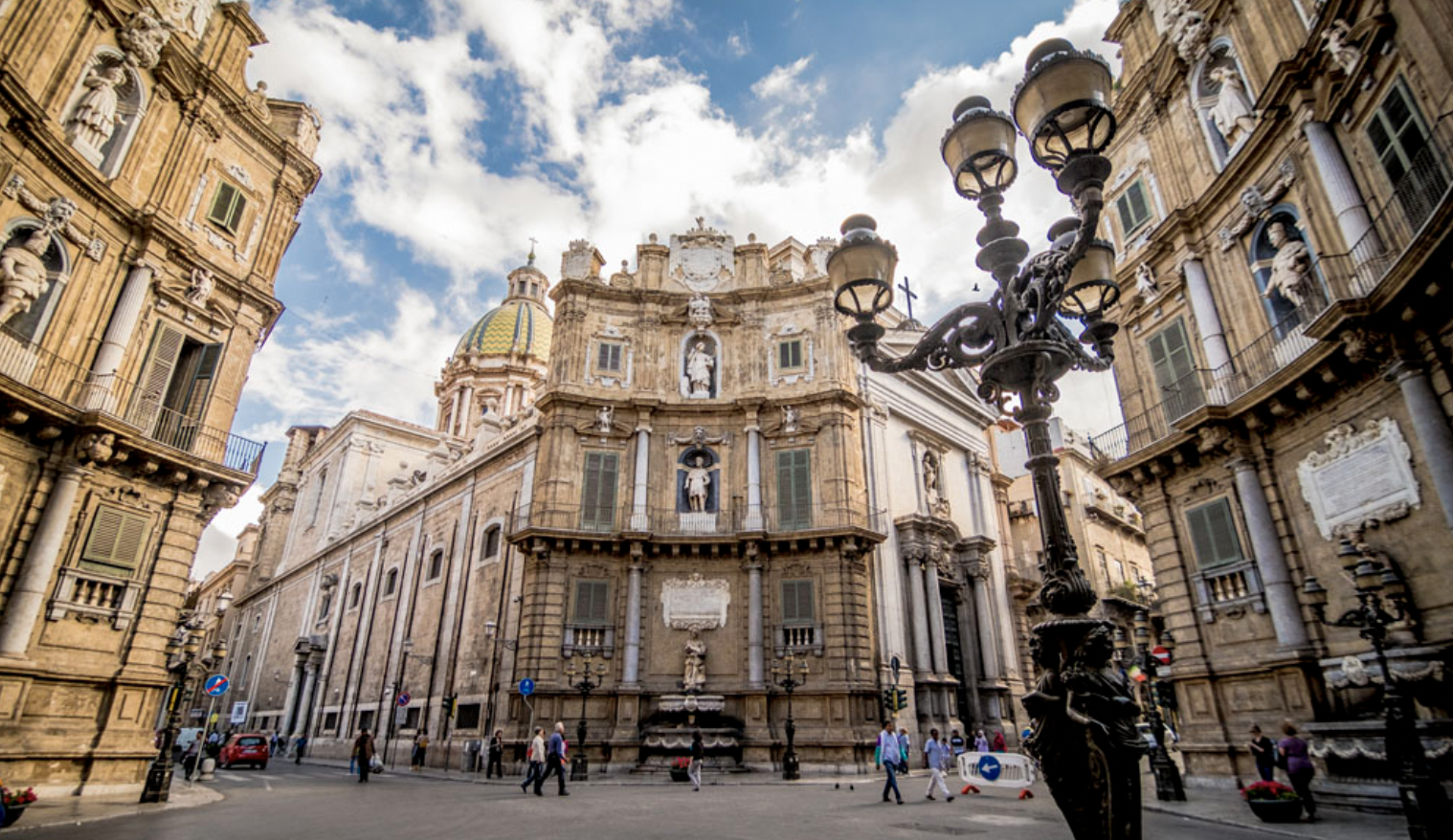
The Quattro Canti, also known as Piazza Villena, are Palermo’s true crossroads: a place where the Baroque city displays its most elegant and dramatic form. Located at the intersection of Via Maqueda and the Cassaro, they represent the exact point where the four ancient neighborhoods of the historic center meet.
As you approach, the four curved facades strike you with their perfect harmony: fountains dedicated to the seasons, statues of the Spanish kings, and, higher up, the city’s patron saints. Everything is designed like an open-air theater, a play of perspectives and symmetries that accompanies anyone passing this intersection. It is one of the most photographed and recognizable symbols of Palermo.
⏰ Always accessible: it is a public square, visitable at any time.
🎟️ Admission: free.
📍Tip: Visit the Quattro Canti as you walk through the center: it’s the perfect spot to orient yourself and begin a historical tour of Palermo’s wonders.
The historic markets: Vucciria, Capo, and Ballarò
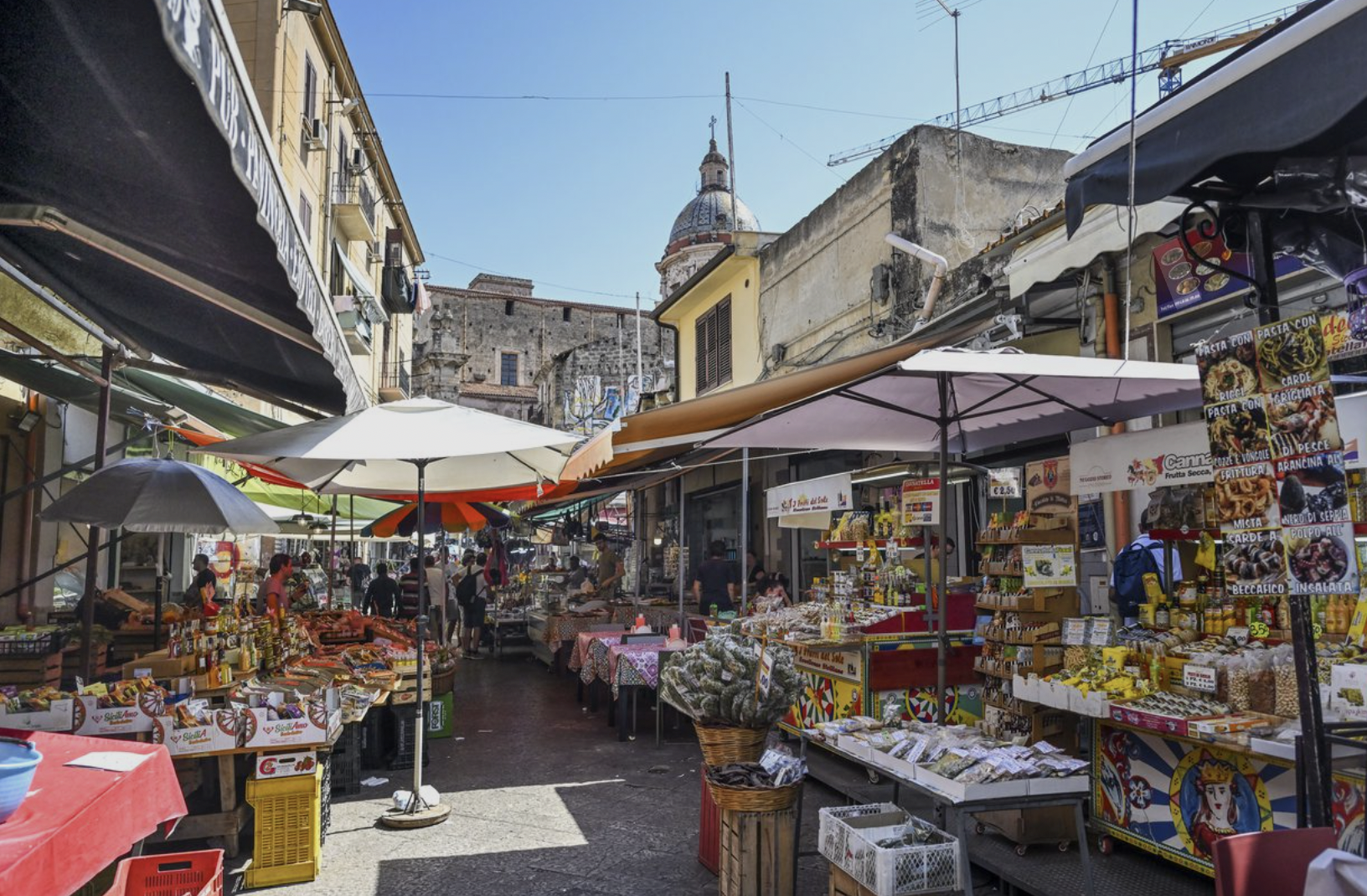
Palermo is famous for its popular markets, true urban theaters where history, daily life, flavors, and traditions intertwine in a unique experience. These markets are more than just places of buying and selling: they are the beating hearts of the city, where every stall tells stories, both ancient and modern.
The Capo is one of the city’s largest and most popular markets, known for its variety and quality of produce. Originally a local market, it has ancient origins and remains a key meeting point for Palermo residents.
Ballarò is the oldest and probably the liveliest market in Palermo. Here, the pace is frenetic, the colors vibrant, and the aromas intense. Stalls of every kind can be found: fresh fish and street food; seasonal fruit and vegetables; spices and aromatic herbs; and typical Sicilian products.
Perhaps the most historically and culturally iconic market, La Vucciria has always attracted artists, writers, and travelers seeking Palermo’s bohemian soul. Renato Guttuso drew inspiration from the market’s name to paint his most famous work. Today, housed in Palazzo Chiaramonte Steri, it depicts not only the market itself, but also the flavors, colors, and life within it.
🎟️ Prices:
- Admission: Free for all markets.
- Street food: €1–4 for panelle, croquettes, and sfincione; €3–5 for arancini; €5–10 for small fish or meat dishes.
- Fresh produce: prices vary, generally cheap.
⏰ Approximate hours: Ballarò daily 7:00–18:00 (liveliest in the morning) | Capo Mon–Sat 8:00–14:00 / 16:00–20:00 (variable hours) | Vucciria market, small during the day, but very lively in the evenings for bars and street food.
📍Tip: Visit Ballarò and Capo early in the morning, when the activity is at its busiest and the fish arrives fresh. La Vucciria, on the other hand, is also ideal in the late afternoon and evening, when it comes alive with music, art, and nightlife.
The Church of the Martorana and San Cataldo
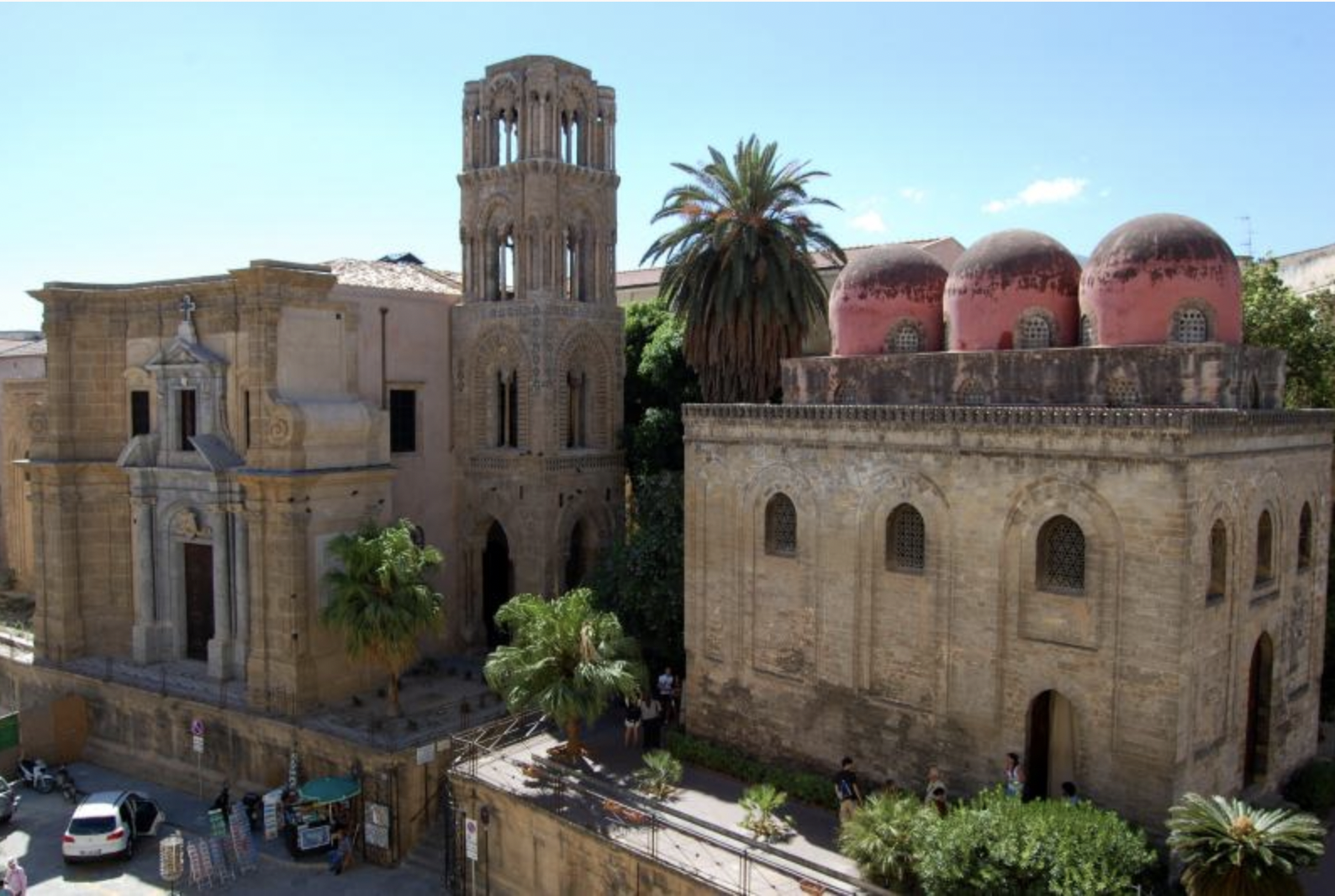
The Church of the Martorana is one of the absolute masterpieces of Arab-Norman art. Founded in 1143, it is best known for its Byzantine mosaics, among the oldest and best preserved in Sicily.
As soon as you enter, your gaze is drawn to Christ Pantocrator and the sacred scenes that illuminate the apse with gold and vibrant colors. The columns, sculpted capitals, and geometric decorations evoke Arab aesthetics, while the basilican structure harks back to Eastern Christian tradition. Over the centuries, the church underwent Baroque modifications, but the 12th-century mosaics remain its beating heart.
Martorana is also linked to a world-famous confectionery tradition: frutta martorana, the famous marzipan dessert created by the nuns of the nearby convent.
Next to the Martorana stands San Cataldo, one of Palermo’s most iconic images thanks to its three red domes, a perfect symbol of Sicily’s Arab heritage. Also founded in the 12th century, during the reign of William I, it represents Norman-Arab architecture in its purest and most intact form.
The church is striking for its simplicity: bare stone, rigorous geometry, and light entering through small arched windows. The interior is deliberately sober, almost monastic, and evokes the original atmosphere of the medieval era.
The Martorana and San Cataldo are side by side and form a single UNESCO jewel, part of Palermo’s Arab-Norman itinerary.
🎟️ Prezzi: Martorana €2–3 | San Cataldo €2.50–5 (variano in base a periodo e gestione)
⏰ Orari: generalmente aperte ogni giorno con fasce orarie variabili; pomeriggio meno affollato.
📍 Consiglio: vai al mattino per godere della luce sui mosaici della Martorana e torna al tramonto per fotografare le cupole rosse di San Cataldo.
The Botanical Garden and Villa Giulia
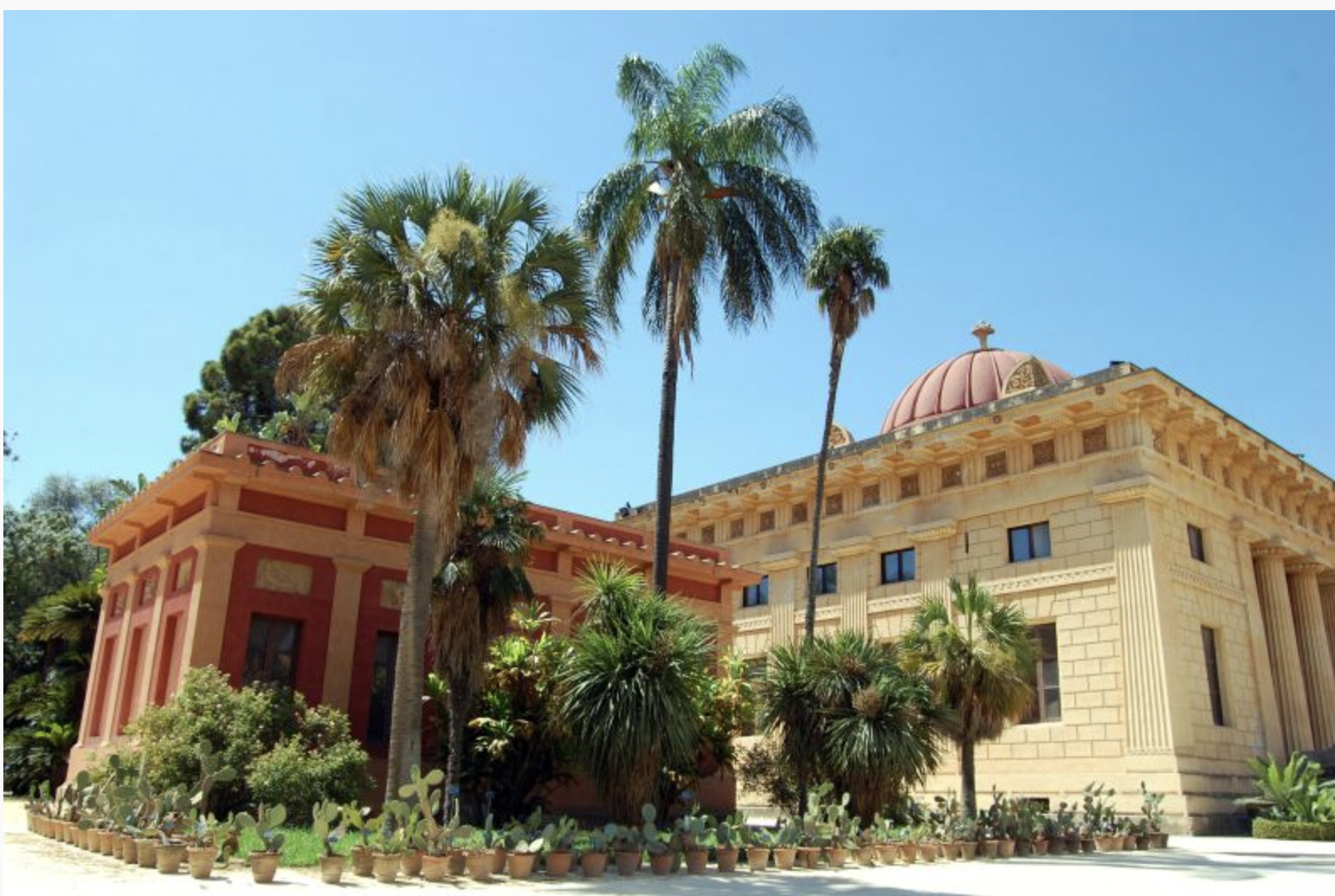
The Botanical Garden and Villa Giulia form one of the most fascinating and relaxing places in Palermo: a large historic garden overlooking the sea, where nature, science, and beauty have coexisted for over two centuries.
The Botanical Garden, founded in 1789, houses species from all over the world, among historic greenhouses, shaded avenues, and monumental trees such as the famous giant ficus.
Next door, Villa Giulia is an elegant 18th-century public garden with statues, geometric fountains, and avenues perfect for a peaceful stroll.
🎟️ Prices: Botanical Garden approximately €5–7 per person (reduced prices available) | Villa Giulia free entry
⏰ Hours: Botanical Garden open daily (9:00 am–5:00 pm/6:00 pm, varies with the seasons) | Villa Giulia open all day until sunset.
📍Tip: Visit in the morning or late afternoon, when the light is softer and the heat is less intense. If you love photography, the play of shadows among the monumental trees of the Botanical Garden offers perfect shots.
Mondello
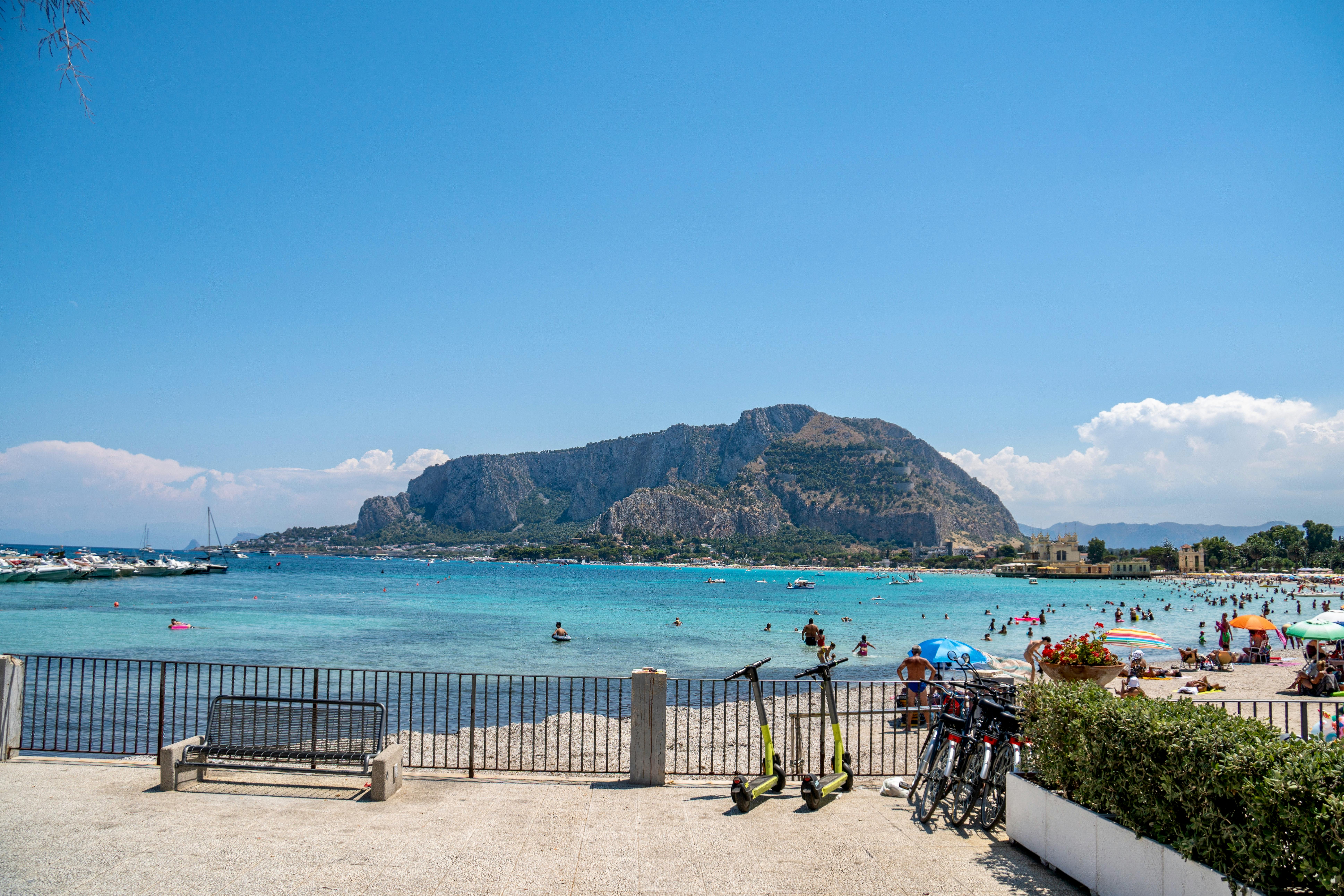
Mondello is Palermo’s iconic beach: a sweep of fine white sand, lapped by a turquoise Caribbean-like sea. Protected by Mount Pellegrino and Mount Gallo, it’s an ancient fishing village transformed into an elegant seaside resort, with its famous Art Nouveau-style Antico Stabilimento (Old Beach Club), seaside restaurants, and a promenade perfect for strolling.
Here, life moves slowly: families, fishermen, athletes, tourists, and locals live together in a bright and relaxed atmosphere. Mondello is ideal for those seeking clean sea, relaxation, and unforgettable views.
⏰ Opening hours: Free access all day; facilities are open approximately 9:00–19:00.
🎟️ Prices:
- Free beach: free.
- Beaches and establishments: €15–30 per day for a sunbed and umbrella (varies according to the season).
- Parking: €1–2/h in regulated areas; free in some areas outside the city center.
📍Tip: Visit Mondello early in the morning for the clearest sea and fewer crowds. It’s beautiful in spring and early autumn: vibrant colors, less crowds, and still warm water.
The Trapezoidale Pier
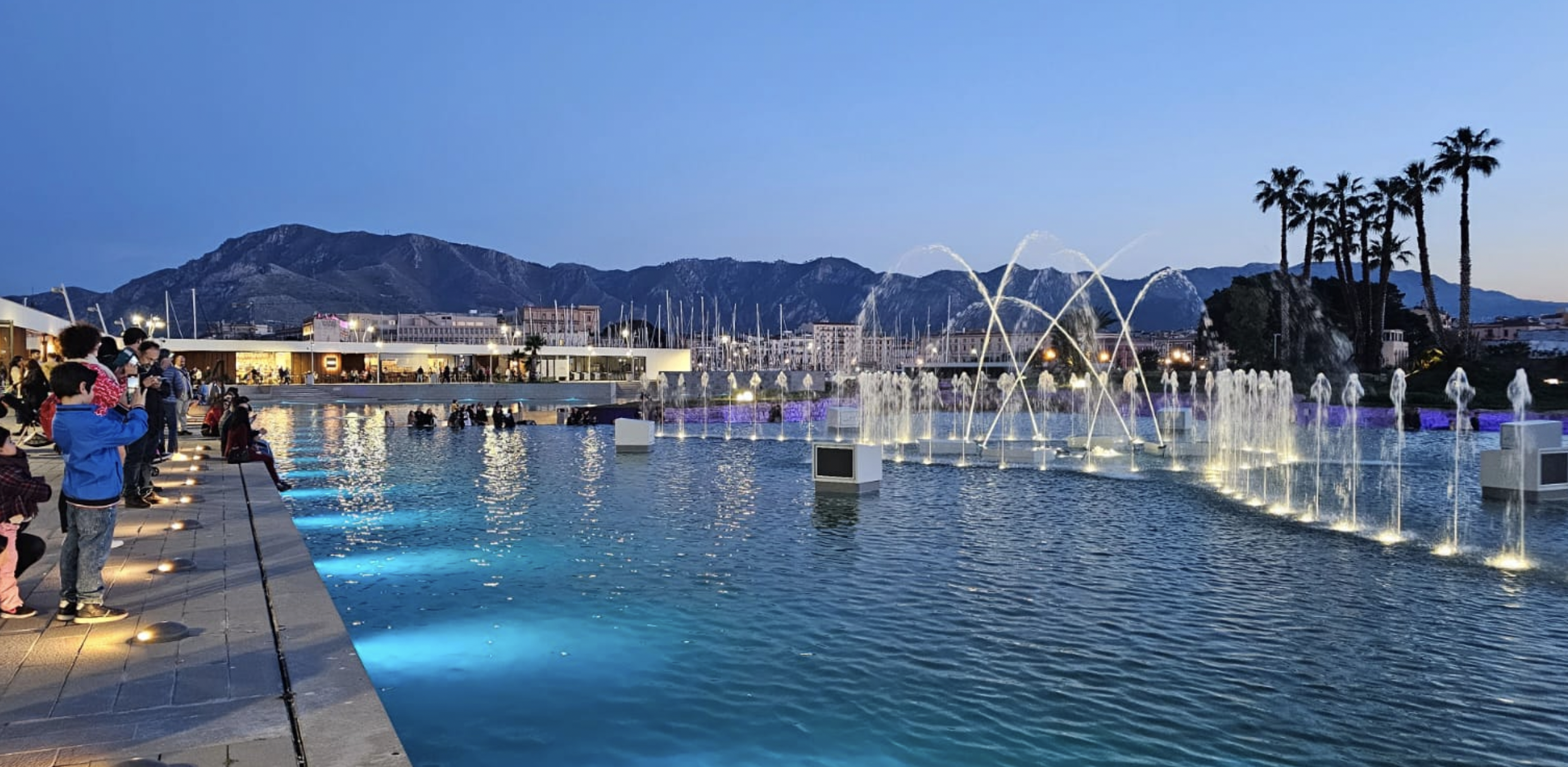
The Trapezoidal Pier is one of Palermo’s most modern and evocative spots, a large urban space overlooking the port where you can stroll between the sea and the city. Here, where ships and cargo once docked, today Palermitans and visitors gather to enjoy the salty breeze, the views of the Mediterranean, and the lights of the port.
As soon as you enter the pier, your gaze opens onto a vast square overlooking the sea, where the green of the lawn blends perfectly with the largest dancing fountain in Italy, named “Marina“.
The Trapezoidal Pier is the ideal place for:
- Strolling, both day and night, along the path that connects to the Foro Italico or the Historic Center
- Enjoying a coffee or tea
- Lunch or dinner: whatever your taste buds desire, the Pier will satisfy it. There are restaurants of every kind: gourmet, bistros, pizzerias, sandwich shops, and much more
- Taking photos with the ships and the open sea in the background
- Participating in the cultural events that are often organized
⏰Opening hours: free access both during the day and in the evening, with possible limitations in the event of port operations
🎟️ Prices: free
📍Tip: Visit the pier at sunset or in the evening, when the harbor lights reflect on the water and the atmosphere becomes particularly evocative. It’s perfect for a romantic stroll or a break after visiting the historic center.
The Palazzina Cinese
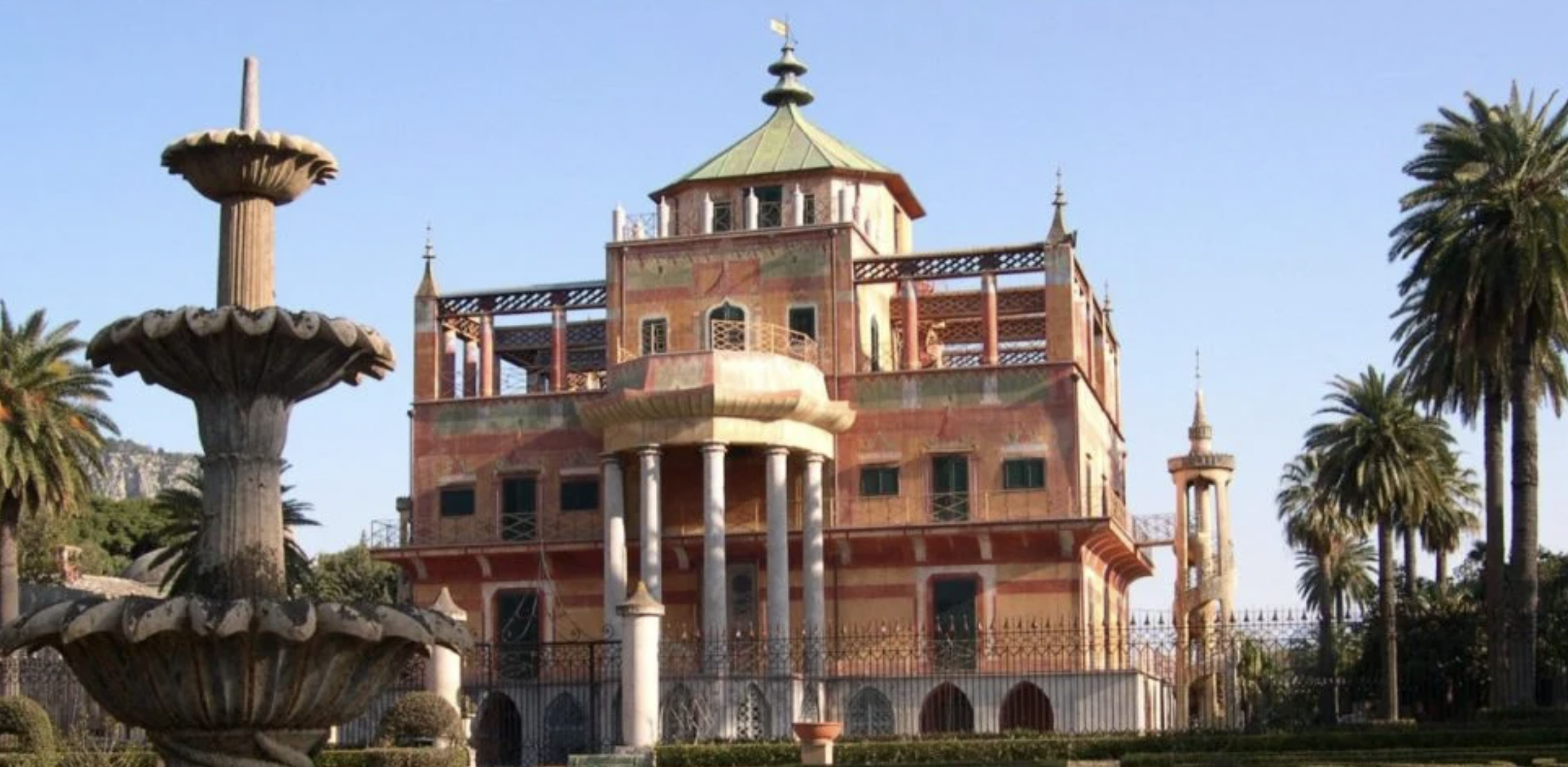
The Palazzina Cinese is one of the most surprising and unusual places in Palermo: a royal pavilion in oriental style. Built in the late 18th century by order of Ferdinand III of Bourbon, it was designed as a pleasure residence for the court, an elegant and “exotic” refuge that reflected the European passion for the Orient.
As soon as you step through the entrance, you find yourself in a completely different world: pagoda roofs, oriental decorations, frescoed rooms, painted floors, and refined furnishings that recount court life, including banquets, receptions, and moments of royal leisure.
Inside the Palazzina, you can:
- Take photos of the “Chinese” roofs with the greenery of the park and Monte Pellegrino in the background
- Visit the frescoed interiors and royal rooms, featuring dragons, flowers, and oriental motifs
- Admire the famous mechanical table, one of the most beloved curiosities among visitors
🎟️ Price: Admission approximately €5–7 (reduced prices available)
⏰ Hours: Generally open Tuesday to Sunday, with seasonal hours
📍 Tip: Visit the Palazzina in the morning and combine it with a stroll in the Favorita or a climb up Monte Pellegrino for an itinerary of art and nature
The Festino of Santa Rosalia (14th July)
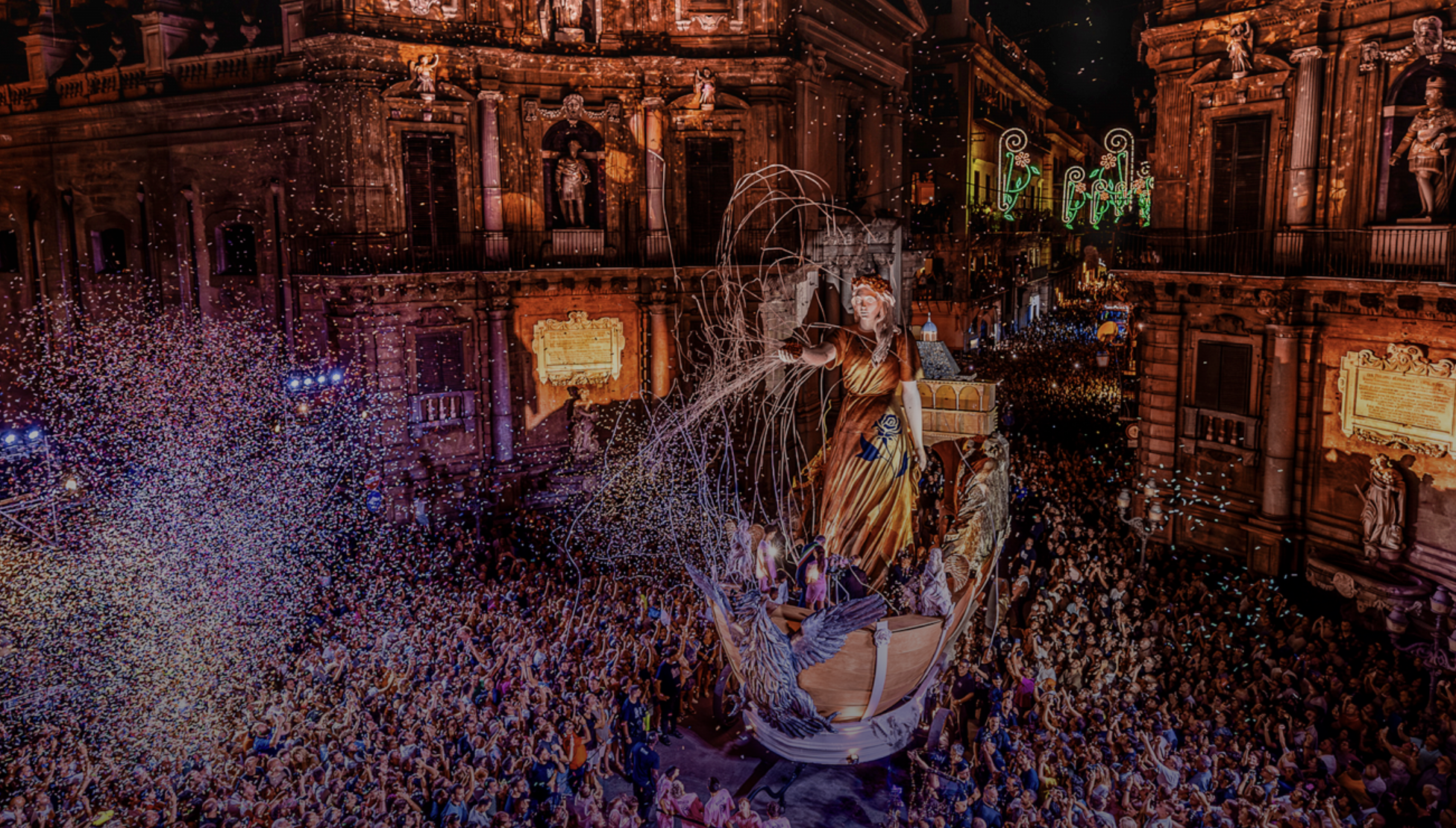
The “Festino” of Santa Rosalia, celebrated every year on the night of July 14th, is Palermo’s most important and spectacular festival. It’s the moment when the entire city unites to pay homage to the “Santuzza“, the patron saint who, according to tradition, freed Palermo from the plague in 1624.
Since then, the Festino has become much more than a religious celebration: it’s a collective ritual that blends faith, theater, music, and folk tradition.
The heart of the festival is the Triumphal Chariot, a huge theatrical machine that changes theme each year and travels through the Cassaro on a journey of lights, dance, performances, and prayers. Thousands of people follow the chariot, chanting “Viva Palermo and Santa Rosalia!“, while balconies, churches, and buildings are illuminated for the occasion.
The evening concludes at the Foro Italico, overlooking the sea, with a spectacular fireworks display that colors the sky and closes the celebration in an explosion of light and devotion. It is one of the most emotional moments of the year, a symbol of Palermo’s identity.
The pilgrimage to Monte Pellegrino
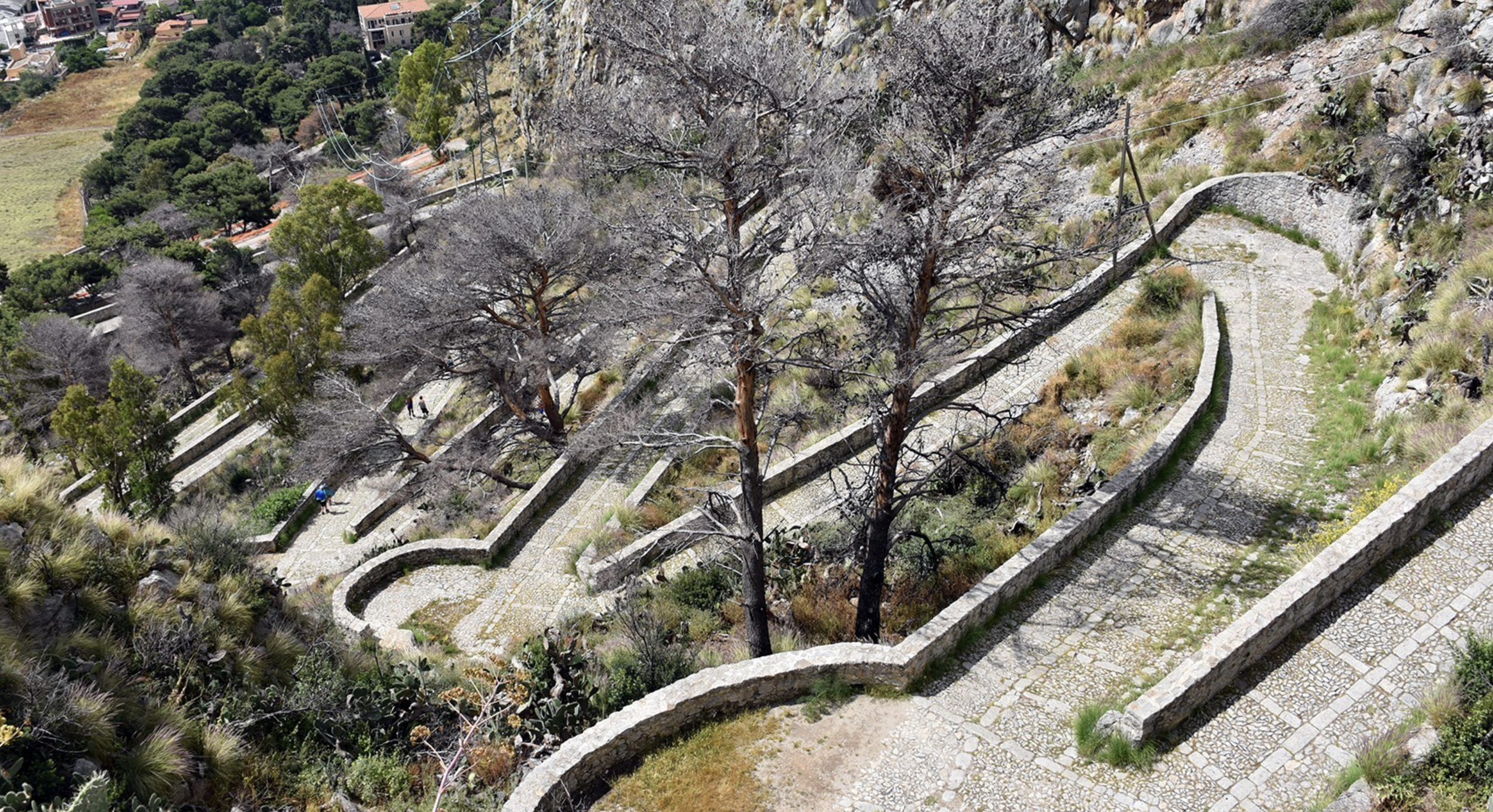
The pilgrimage to Monte Pellegrino, the “most beautiful mountain in the world” according to Goethe, is one of the most cherished spiritual traditions of the people of Palermo. Every year, on September 3rd and 4th, thousands of faithful walk up to the Sanctuary of Santa Rosalia, the city’s patron saint.
It is a journey that combines devotion, hard work, silence, and hope, retracing the places where the saint lived as a hermit in the 12th century
he route winds along the scenic road that climbs from the Addaura neighborhood to the top of the mountain, with curves, hairpin bends, and stretches immersed in nature. At the end of the journey, visitors reach the Sanctuary, a cave transformed into a church, where a cool, silent atmosphere welcomes pilgrims.
A pilgrimage is not just a religious act: it is a moment of community, a collective ritual that speaks of identity, memory, and belonging.
Palermo’s culinary tradition is a blend of Mediterranean cultures—Arab, Spanish, Jewish, and Sicilian—and is based on a few key principles: street food is the star, eating on the street is an integral part of the Palermo experience; melancholy transformed into flavor, as simple ingredients like bread, chickpeas, vegetables, and fish become complex dishes; and sweet-savory contrasts: a legacy of Arab influence, evident in many recipes.
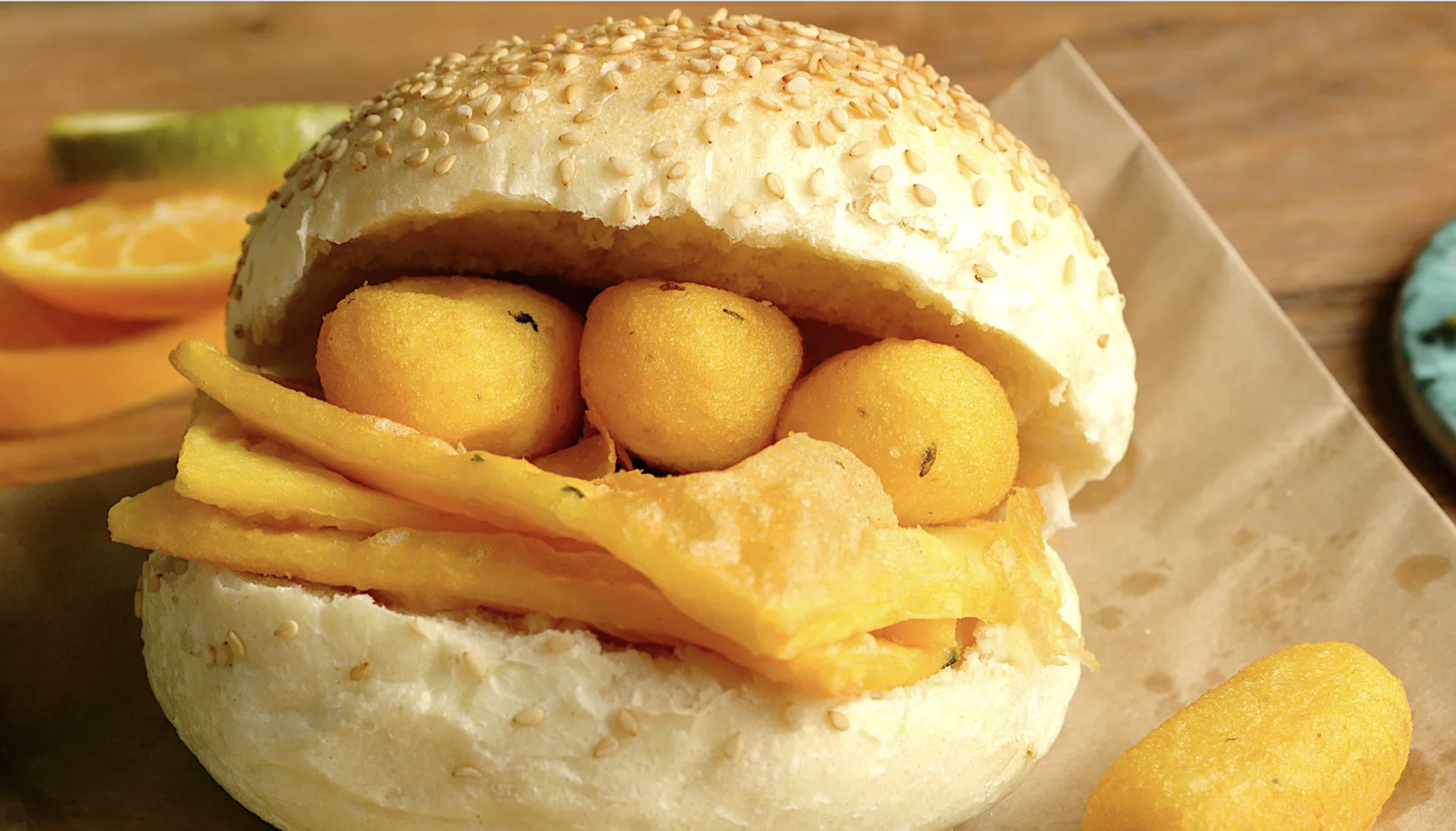
Panelle and crocchè
The heart of Palermo street food:
- Panelle: Chickpea flour fritters, crispy on the outside and soft on the inside.
- Crocchè: fried potato croquettes, often flavored with pepper and parmesan cheese.
They are commonly served in a sandwich or on a plate with lemon.
The Arancina
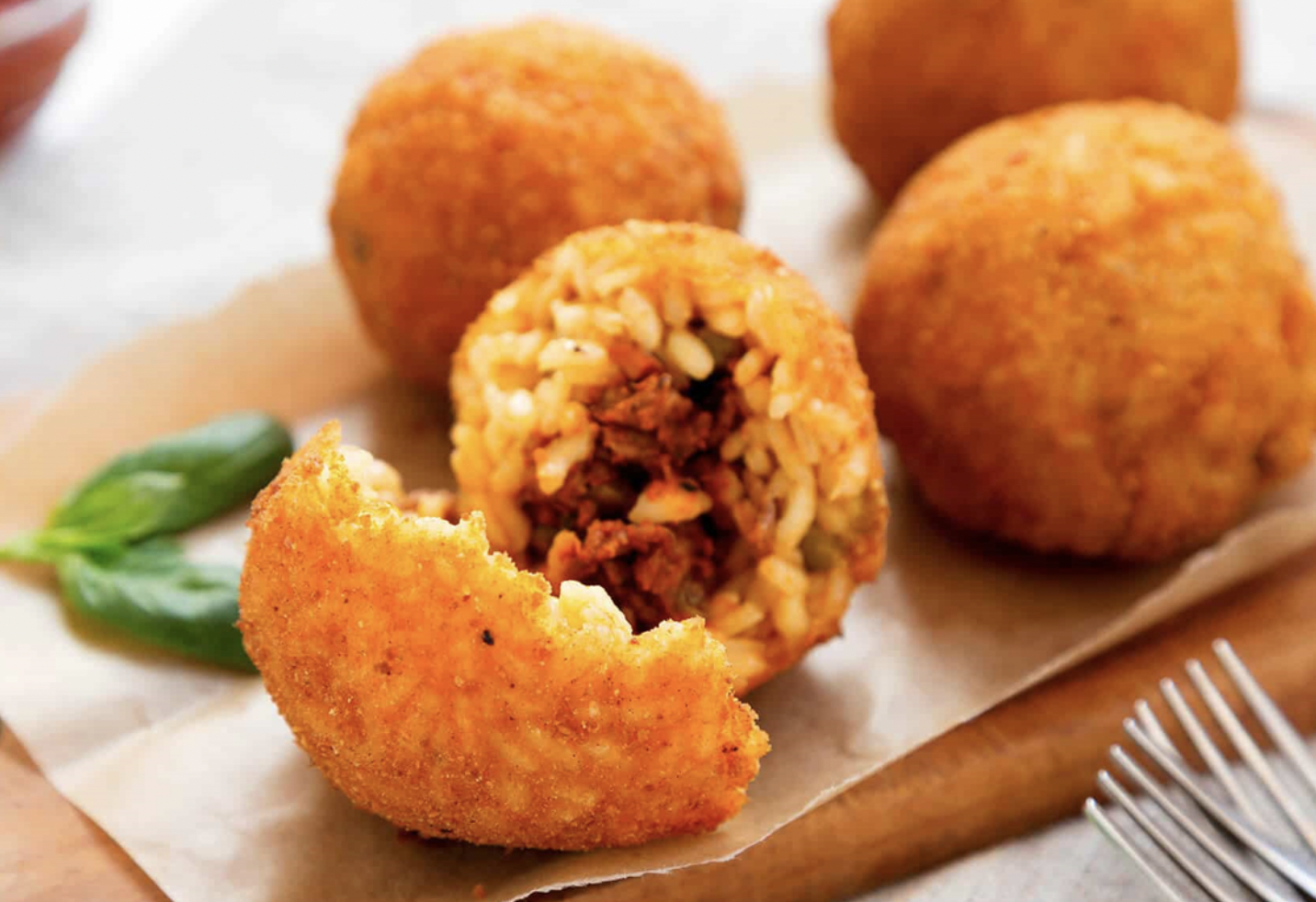
In Sicily, there’s a relentless conflict that, instead of hurting… It makes you hungry. It’s the legendary dispute between Palermo and Catania over the name of the queen of Sicilian street food.
In Palermo, they call it arancinA, in the feminine form: round like an orange, golden, soft and perfect.
In Catania, however, it is arancinO, in the masculine form: conical like Etna, proud, pointed and full of personality.
Each city defends its own version with epic pride: the people of Palermo claim tradition and the round shape, while the people of Catania extol the “volcanic” tip and the bold character of their arancino.
But the truth is that this “conflict” is one of the island’s most endearing stories:
an ironic, playful rivalry that unites rather than divides.
Because, in the end, only one thing is certain in Sicily:
whether you call it arancina or arancino… it’s always a marvel to eat.
The Sfincione
An absolute must.
It’s a soft focaccia topped with tomato sauce, anchovies, onions, and caciocavallo or aged cheese. Often rectangular in shape, it’s a signature dish of Palermo.

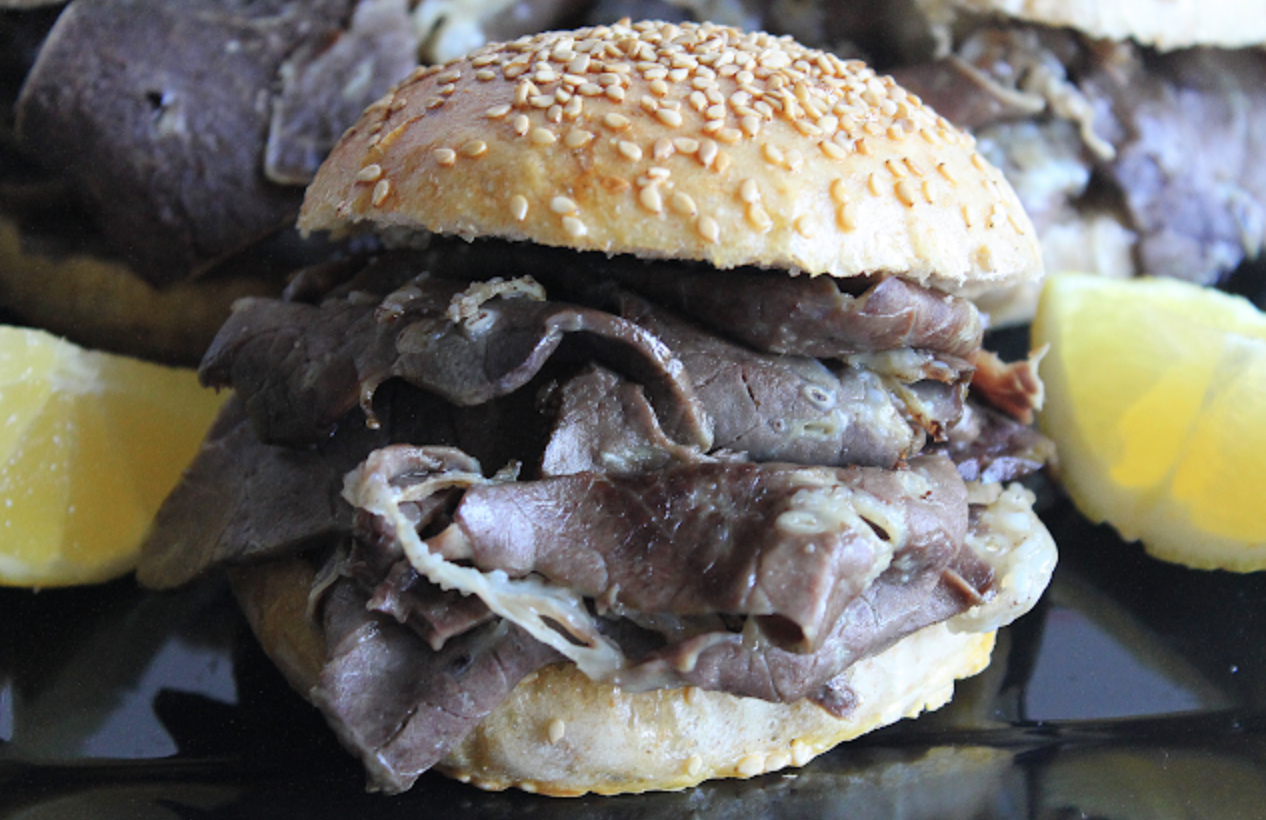
The Pani ca Meusa
One of the most authentic and least-known specialties among the general public.
It’s a sandwich with beef spleen (meusa), often topped with lemon or salted ricotta, served in a warm bun. A popular dish at historic street stalls.
The Sicilian Cassata
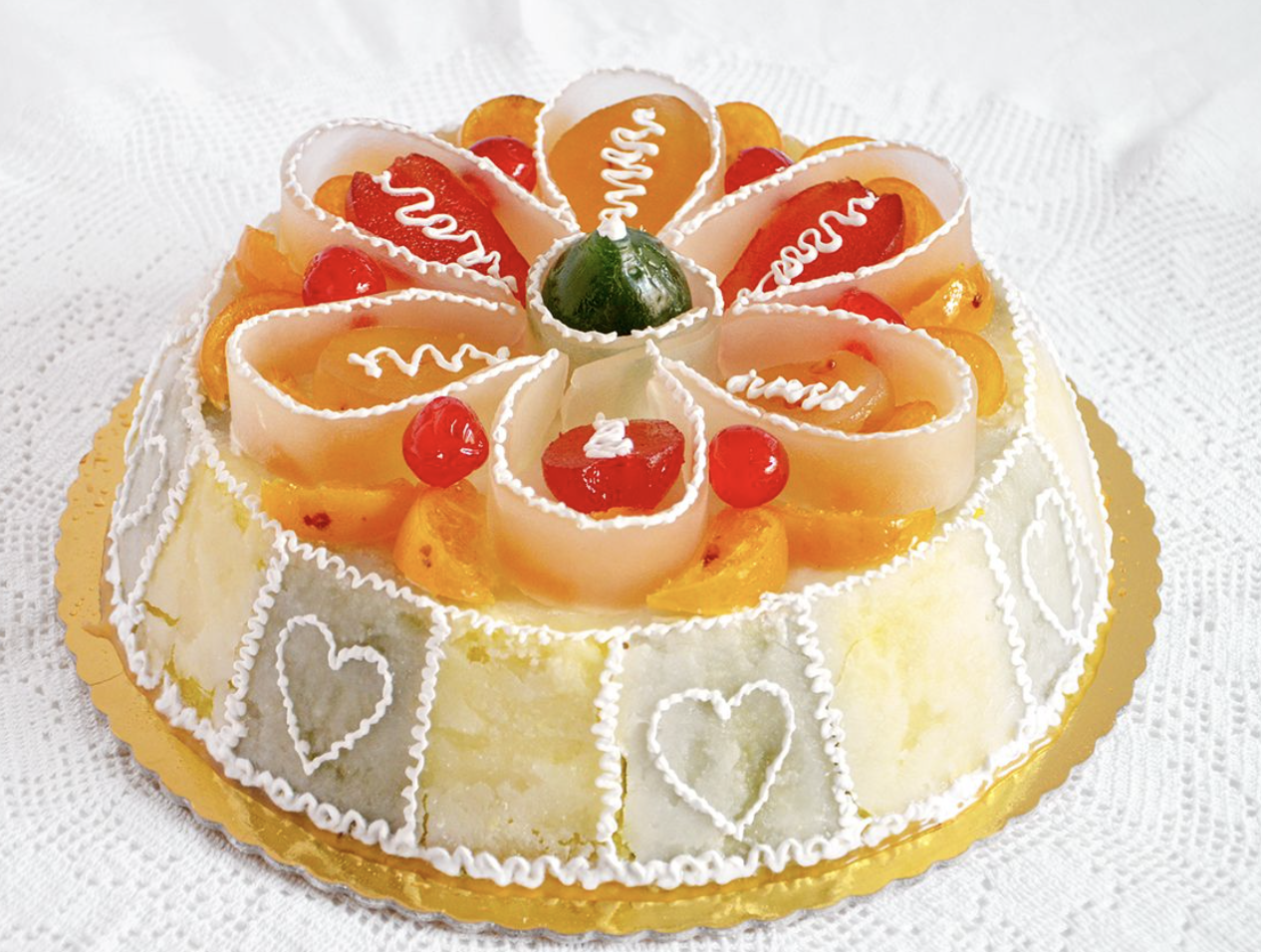
Sicilian cassata is one of Sicily’s most iconic and scenic desserts, a true triumph of colors, aromas, and flavors.
Born in Palermo, it is a symbol of the island’s cultural richness: a dessert that reflects centuries of Arab, Norman, and Baroque influences, transformed into a unique recipe.
Its origins date back to the Arab era (9th–11th centuries), when the use of sweetened sheep’s ricotta and marzipan was introduced. In the following centuries, the nuns and master pastry chefs of Palermo perfected it, adding sponge cake, candied fruit, and the typical white icing that made it the work of art we know today.
The traditional cassata is a harmonious combination of elements:
- Soft sponge cake
- Sweeted and sieved sheep’s milk ricotta with chocolate chips
- Green marzipan
- Colorful candied fruit, especially orange and citron
- Bright white icing and baroque decorations
The appearance is deliberately theatrical: a jewel-like cake, rich and elegant, which embodies the decorative imagination of Palermo.
Cannoli with ricotta
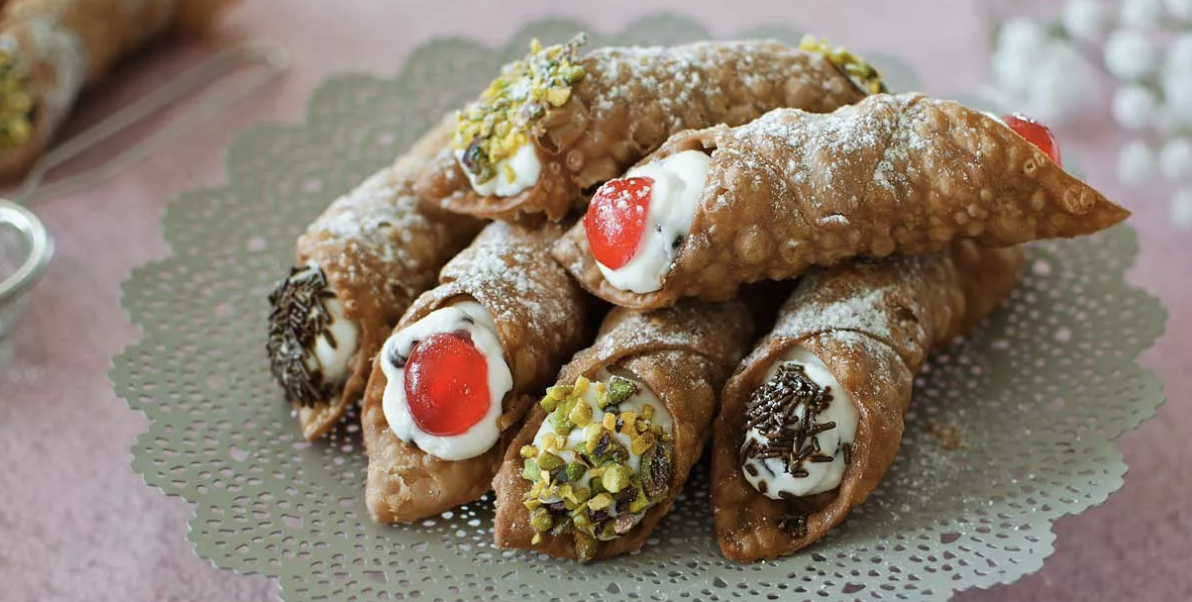
Sicilian cannoli are probably the island’s most famous dessert and one of the symbols of its pastry tradition. Originally from Sicily, they have an unmistakable shape: a tube-shaped fried pastry shell filled with a sweet sheep’s ricotta cream, often enriched with chocolate chips, candied fruit, or chopped pistachios.
The origins of cannoli date back to medieval Arab Sicily (9th–11th centuries), a period in which sweet pastries were profoundly influenced by Middle Eastern cuisine. The Arabs introduced sugar, spices, and sweet ricotta processing techniques, elements that would become fundamental to Sicilian desserts.
Cannoli were initially associated with Carnival, a period of celebration and abundance preceding Lent, when the consumption of sweets was particularly popular. Over time, however, they became a popular year-round dessert, enjoyed by generations of Sicilians and visitors.
Check-in: a partire dalle ore 16:00
Check-out: entro le ore 10:00
ll check-in anticipato e il check-out posticipato sono gratuiti presso questa villa, in base alla disponibilità.
Vietato fumare
Animali non ammessi
Ospiti extra non ammessi
Non è permesso organizzare feste o eventi
I costi di eventuali danni verranno dedotti dal deposito cauzionale